
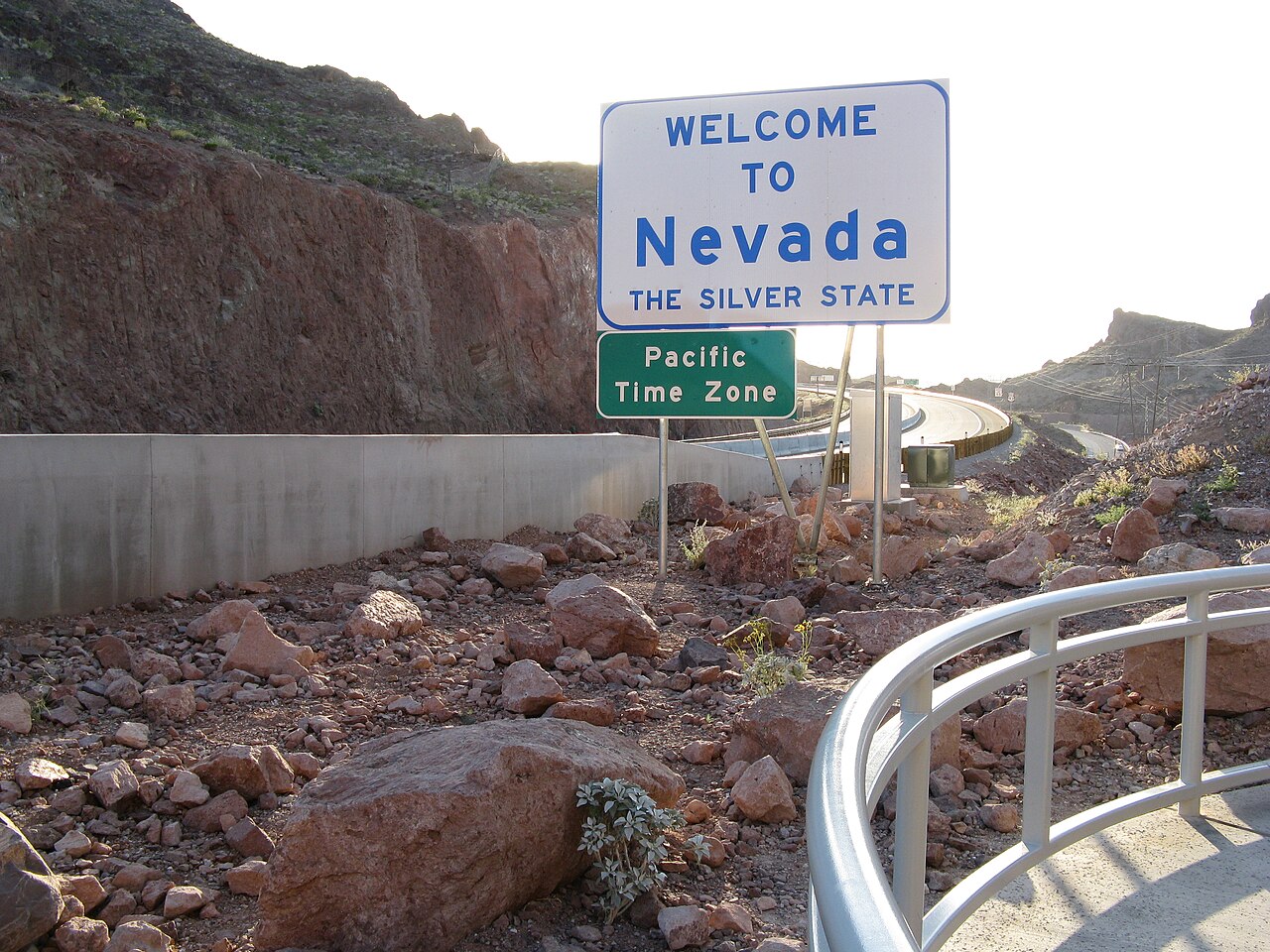
Nevada is not a permitless carry state for concealed handguns. To carry concealed, you need a Concealed Firearm Permit from a Nevada county sheriff, and you generally must be 21 (18 for qualifying military members and veterans). Open carry without a permit is generally legal for adults who can lawfully have a gun.
This guide covers the permit process, the in-person training and shooting test, permits for non-residents, reciprocity, open carry, guns in cars, off-limits places, and Nevada’s self-defense law.
Nevada Concealed Carry At A Glance
| Permitless carry | No |
|---|---|
| Minimum age to carry | 21 (18 for military and honorably discharged veterans) |
| Permit name | Concealed Firearm Permit (CFP) |
| Issued by | County sheriff |
| Permit fee | Varies by county (sheriff fee capped at $60 plus background checks; Washoe $100 new / $65 renewal) |
| Permit length | 5 years |
| Training required | Yes: Sheriff-approved course on handgun use and Nevada law, plus an in-person proficiency shoot. |
| Online course counts? | No, in-person training required |
| Non-resident permit | Yes (Apply to any Nevada county sheriff; same course and in-person proficiency shoot as residents.) |
| Lifetime permit | No |
| States that honor it | About 33 (USCCA) |
| Last verified | November 2, 2026 |
Do You Need A Permit To Carry In Nevada?
Yes, to carry concealed. Under NRS 202.350, carrying a concealed firearm on your person without a permit is a category C felony. That is a serious charge, so do not assume another state’s permitless rules carry over.
Nevada has no law allowing permitless concealed carry. You can carry concealed if you hold a Nevada permit or a permit from a state on Nevada’s recognition list.
Under NRS 202.3657, the sheriff must deny or revoke a permit for anyone who:
- Has any felony conviction, in Nevada or elsewhere.
- Has a conviction for domestic violence or stalking, or is under a domestic violence protective order or a high-risk behavior order.
- Has a misdemeanor crime of force or violence in the last three years.
- Has a DUI conviction or court-ordered substance treatment in the last five years (presumed habitual use).
- Was admitted to a mental health facility in the last five years, or was declared incompetent or insane.
- Has an outstanding warrant, or is on parole or probation.
You must also be able to possess a handgun under state and federal law.
How To Get A Nevada Concealed Firearm Permit
Residents apply to the sheriff of their home county. In Clark County, that is the Las Vegas Metropolitan Police Department, which the county sheriff heads. The steps:
- Check eligibility. You must be 21, or 18 to 20 if you are in the Armed Forces, a reserve component or the National Guard, or were discharged under honorable conditions.
- Complete an approved course. See the training section below.
- Fill out the sheriff’s application. It is signed under oath before a sheriff’s employee or a notary.
- Apply in person. The sheriff takes your fingerprints and a color photo, and you pay the fees.
- Wait for the decision. The sheriff runs state, FBI and NICS checks and must approve or deny within 120 days of a complete application, under NRS 202.366.
Cost: The statute caps the sheriff’s fee at $60, plus the cost of the background checks. Totals vary by county. For example, the Washoe County Sheriff charges $100 for a new permit and $65 to renew, fingerprinting included.
Term: Five years. One permit covers every handgun you own or later get.
Do You Need A Class For A Nevada Carry Permit?
Yes. NRS 202.3657 requires proof that you completed a firearm safety course. The course must teach handgun use and Nevada’s laws on the use of a firearm.
- Who can teach it: A course approved by a Nevada sheriff under Nevada Sheriffs’ and Chiefs’ Association standards, or one offered by a law enforcement agency, a college or university, or a national organization that certifies firearm instructors.
- Hours: The statute sets no minimum. Your instructor and sheriff will tell you what the course includes.
- Shooting test: Sheriffs require proof of proficiency. Washoe County, for example, wants both a certificate of completion and a Firearm Proficiency Certificate, and the training must be completed within 12 months before you apply.
Plan on an in-person class with a live-fire qualification. An online-only course does not meet Nevada’s requirement. A short online safety course can still be a useful primer before you sign up for the required class.
Get Started On Your Permit Online
Watch a short instructional video on firearm safety and responsible carry, take a 10-question quiz, and download your certificate of completion.
Start The Free Online Safety Video →
The certificate is a training record, not a license or permit. In Nevada, you apply for the Concealed Firearm Permit (CFP) through the County sheriff.
Can Non-Residents Get A Nevada Carry Permit?
Yes. Under NRS 202.3657, a non-resident may apply to the sheriff of any Nevada county. You give your home-state driver’s license or ID number instead of a Nevada one.
Non-residents meet the same rules as residents. That means the same sheriff-approved course and proficiency shoot, and an in-person visit for fingerprints and a photo. Some counties add their own rules; for example, Lyon County asks out-of-state applicants to apply in the county where they completed their shooting qualification.
If you hold an out-of-state permit and move to Nevada, you have 60 days to get a Nevada permit from your county sheriff before your old permit stops working here.
Which States Honor The Nevada Concealed Firearm Permit?
About 33 states honor or accept the Nevada permit, according to USCCA’s reciprocity map (a non-official source). Some limit it to resident permits or to holders 21 and older. Notable states that do not honor it include California, New York, New Jersey, Illinois and Pennsylvania.
Nevada honors permits from the states on its official list under NRS 202.3689. The 2026 CCW Recognition List, effective July 1, 2026, names 28 states: Alaska, Arizona, Arkansas, Florida, Idaho (enhanced permit only), Illinois, Kansas, Kentucky, Louisiana, Massachusetts, Minnesota, Mississippi (enhanced only), Montana, Nebraska, New Mexico, North Carolina, North Dakota (Class 1 only), Ohio, Oklahoma, South Carolina, South Dakota (enhanced only), Tennessee, Texas, Utah, Virginia, West Virginia, Wisconsin and Wyoming.
Notice that big neighbors like California and Oregon are not on Nevada’s list. Visitors from those states need a Nevada non-resident permit or a permit from a listed state to carry concealed here.
Going next door? Read our guides for California, Oregon, Idaho, Utah and Arizona, or see all state gun laws.
Can You Open Carry In Nevada?
Generally, yes. Nevada’s concealed carry offense in NRS 202.350 covers firearms carried concealed on your person. No state permit is required to carry a handgun openly.
The same off-limits places that apply to permit holders also apply to open carry, including schools and posted public buildings. Businesses can still ask you to leave. If a jacket or clothing covers the gun, it may be treated as concealed, so be careful if you do not hold a permit.
Can You Keep A Gun In Your Car In Nevada?
With a permit, you may carry concealed in your vehicle the same as on foot.
Without a permit, the rule is narrower. NRS 202.350 bans carrying a concealed firearm “upon his or her person” and does not separately address vehicles.
USCCA (non-official) reads this to allow a handgun stored off your body, such as in a glove box or under the seat, but not in a pocket or concealed holster. Ask your sheriff if you are unsure.
- Long guns: Under NRS 503.165, you may not carry a loaded rifle or shotgun in or on a vehicle on a public road, with narrow exceptions.
- Work parking lots: We did not find a Nevada law that requires employers to allow guns in employee vehicles. Check your employer’s policy.
- School parking lots: NRS 202.265 bans firearms on the property of K-12 schools, child care facilities and the Nevada System of Higher Education without written permission. The statute has no exception for permit holders in a car, so do not drive onto campus armed without that permission.
Where You Can’t Carry A Gun In Nevada
- K-12 schools, child care facilities and Nevada System of Higher Education property, without written permission from the principal, college president or facility representative (NRS 202.265). A violation is a gross misdemeanor.
- Public buildings on airport property (NRS 202.3673).
- Public buildings with a metal detector at each public entrance, or a no-firearms sign at each public entrance, unless you have written permission or another exception applies (NRS 202.3673).
- Public buildings on school, child care or college property without written permission (NRS 202.3673).
- Anywhere while you are impaired: a 0.08 blood or breath alcohol level, or under the influence of drugs, under NRS 202.257. The home self-defense exception is narrow.
- Federal property where federal law bans firearms, such as federal courthouses and post offices.
- Private property where the owner bans guns. If asked to leave, leave.
Duty to inform: Nevada does not require you to tell an officer you are armed. However, NRS 202.3667 requires a permit holder carrying concealed to have the permit and proper ID on them. You must show them if an officer asks.
Nevada Castle Doctrine And Stand Your Ground Law
Nevada’s main self-defense statute is NRS 200.120.
- Justifiable homicide: Killing in necessary self-defense, or in defense of an occupied home, an occupied motor vehicle or a person, against someone who clearly intends to commit a crime of violence.
- Castle doctrine: The statute also covers force against a person trying to enter an occupied home or vehicle to assault someone inside.
- Stand your ground: You do not have to retreat before using deadly force if you are not the original aggressor, have a right to be where you are, and are not engaged in criminal activity at the time.
- Civil immunity: Under NRS 41.095, force that was justified under these laws is immune from civil liability in a suit by the person it was used against.
These laws do not stop police from arresting you or prosecutors from filing charges. Proving self-defense can take a long time, and a defense can be expensive. That is why many permit holders carry self-defense legal protection.
Protect Yourself After A Self-Defense Incident
CCW Safe is a self-defense legal protection membership. It pays criminal and civil defense costs upfront for members involved in a self-defense incident, so you aren't paying for a defense lawyer out of your own pocket.
Nevada Gun Laws FAQ
Is Nevada A Constitutional Carry State?
No. Nevada requires a permit for concealed carry. Open carry without a permit is generally legal for adults who can lawfully possess a firearm.
How Much Is A Nevada Concealed Carry Permit?
It depends on the county. The statute caps the sheriff’s fee at $60 plus background check costs. Washoe County charges $100 for a new permit and $65 to renew.
How Long Does It Take To Get A Nevada CCW?
The sheriff has up to 120 days after a complete application to approve or deny it, under NRS 202.366. Plan ahead if you have a trip coming up.
Can You Carry A Gun In Church In Nevada?
Nevada has no statute that bans carry in places of worship. Churches are private property, so a church can ban guns, and you should follow its policy. Churches that want an armed safety team should look into legal protection for church security teams.
Can You Carry A Gun In A Casino In Nevada?
The Nevada carry statutes we reviewed do not list casinos as off-limits. Casinos are private property and can ban firearms, so check the property’s rules first.
Did Nevada Gun Laws Change In 2025?
Not for carry. AB 105, which would have banned guns within 100 feet of polling places and ballot drop boxes, was vetoed by Gov. Joe Lombardo, according to a June 2025 news report.
Sources
- NRS 202.3657, Application and eligibility for permit (2025 NRS via Justia)
- NRS 202.366, Investigation and term of permit
- NRS 202.3673, Permittee in public buildings
- NRS 202.265, Weapons on school and child care property
- NRS 202.350, Concealed weapons without a permit
- NRS 202.257, Possession while impaired
- NRS 503.165, Loaded rifle or shotgun in a vehicle
- NRS 200.120, Justifiable homicide
- NRS 41.095, Civil immunity for justified force
- NRS Chapter 202 index (Nevada Legislature)
- Nevada 2026 CCW Recognition List (Records, Communications and Compliance Division)
- Washoe County Sheriff CCW application
- Lyon County CCW application portal
- USCCA, Nevada reciprocity map (non-official, backup)
- FOX5 Vegas, AB 105 veto report (news, backup)