
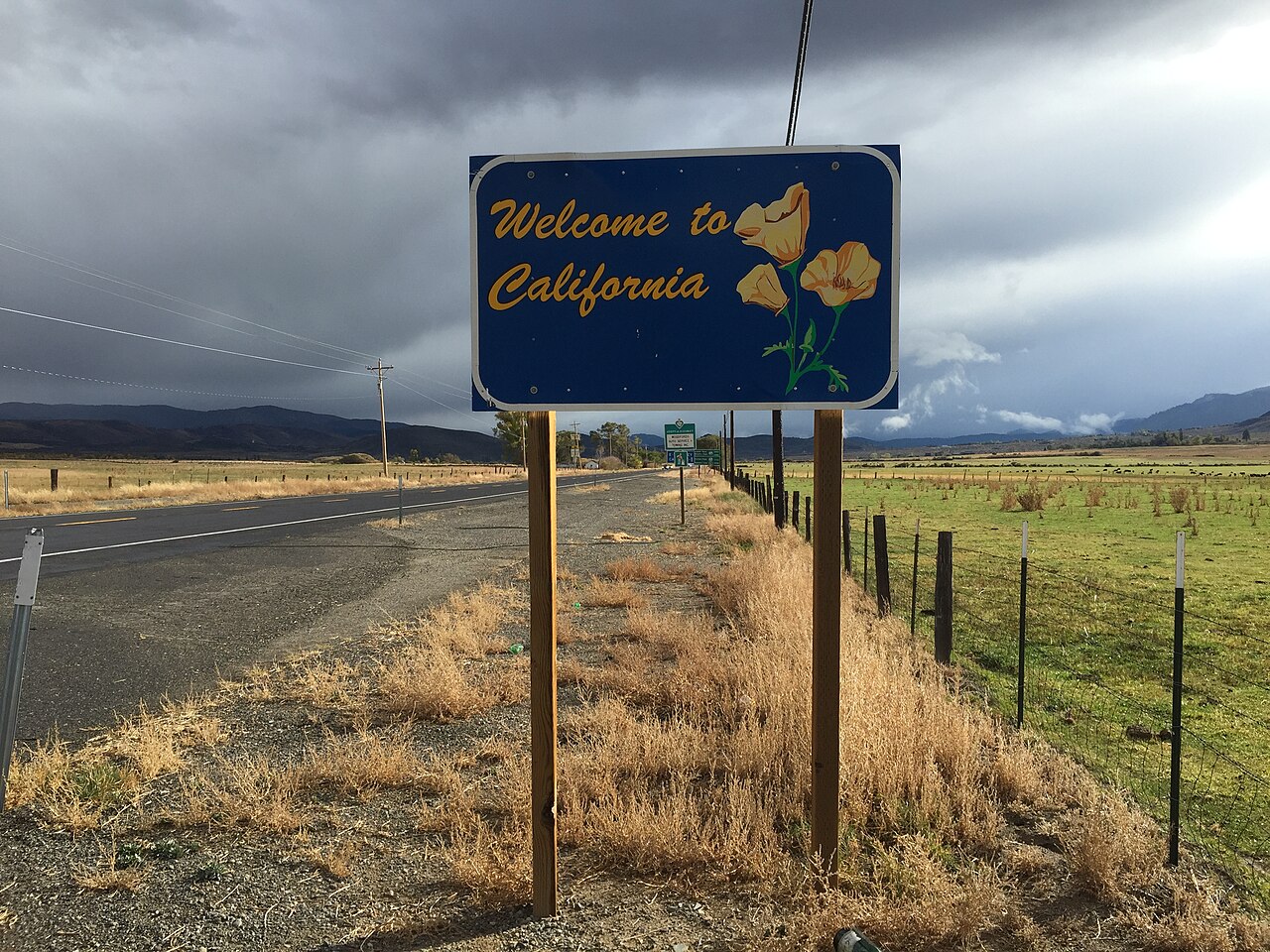
California is not a permitless carry state. To carry a concealed handgun in public you need a License to Carry a Concealed Weapon (CCW), and you must be at least 21. Your county sheriff or city police chief issues it after 16 hours of training with live fire.
This guide covers who can get a California CCW, the training rule, the new non-resident licenses, open carry, guns in cars, the SB 2 sensitive places list and where it stands in court, reciprocity and self-defense law. Rules here change often, so check with your licensing agency before you rely on any one point.
California Concealed Carry At A Glance
| Permitless carry | No |
|---|---|
| Minimum age to carry | 21 |
| Permit name | License to Carry a Concealed Weapon (CCW) |
| Issued by | County sheriff or city police chief (DOJ application BOF 4012) |
| Permit fee | Varies by agency (DOJ + local processing fees, plus fingerprints and training) |
| Permit length | Up to 2 years |
| Training required | Yes: At least 16 hours (incl. 1 hour on mental health), DOJ-certified instructors, written test, and live-fire qualification with each licensed firearm; 8 hours to renew (PC § 26165). |
| Online course counts? | Partly (classroom online, range in person) |
| Non-resident permit | Yes (Since Jan 1, 2026 (AB 1078): apply to the agency of your primary California location; 21+, home-state ID, fingerprints, full § 26165 training with live fire.) |
| Lifetime permit | No |
| States that honor it | About 24 (handgunlaw.us); California honors no other state's permits |
| Last verified | November 2, 2026 |
Do You Need A Permit To Carry In California?
Yes. California requires a CCW license to carry a concealed handgun in public (Penal Code § 26150). Carrying a loaded firearm on your person or in a vehicle in a public place in an incorporated city is a crime without a license or another exemption (Penal Code § 25850).
The licensing authority must issue a license to an applicant who:
- Is at least 21 years old.
- Is not a “disqualified person” under Penal Code § 26202.
- Lives in the county or city, or spends substantial time at a principal place of work or business there (or qualifies as a non-resident, covered below).
- Completes the training course in Penal Code § 26165.
Anyone barred from owning guns under state or federal law cannot get a license. Penal Code § 26202 adds more disqualifiers, such as certain restraining orders, some hate-crime convictions within 10 years, and unlawful drug use. AB 1078 expanded that list as of January 1, 2026, according to the California DOJ’s Information Bulletin 2026-DLE-13.
How To Get A California CCW License
Every agency uses the statewide DOJ application, but each one runs its own intake. Expect an interview, a background check and fingerprints.
- Find your licensing authority. Apply to your county sheriff, or to your city police chief if your city processes its own licenses.
- Complete the application. The DOJ form is the Standard Initial and Renewal Application (BOF 4012), listed on the DOJ Bureau of Firearms forms page. Many agencies take it through an online portal.
- Submit fingerprints. Residents use Live Scan. The agency then runs the state and federal eligibility check.
- Interview. The agency interviews you and may contact references.
- Finish training. You cannot be required to pay for training before the agency’s first disqualification review. Then you take the 16-hour course and qualify with each handgun you want listed.
- Get your license. The agency must send written approval or denial within 120 days of a complete application, or 30 days after it gets DOJ background results, whichever is later (Penal Code § 26205).
Cost: There is no single statewide price. The DOJ fee is capped at its processing costs, and the local agency may add a fee for its reasonable costs. Fingerprinting and the training course cost extra, so ask your agency for its current fee schedule.
How long it lasts: A standard license is valid for up to 2 years (Penal Code § 26220).
Do You Need A Class For A California Carry Permit?
Yes, and it is one of the longest in the country. Penal Code § 26165 sets these rules for a new license:
- At least 16 hours of instruction, including at least 1 hour on mental health and mental health resources.
- Topics include safe handling, shooting technique, secure storage, transport, where licensees may carry, and the law of lethal force in self-defense.
- DOJ-certified instructors must teach the firearms portion.
- A written test is required.
- Live fire on a range is required, with a shooting-proficiency demonstration for each firearm you want on the license. Each agency publishes its own round count, distances and passing scores.
An agency may instead require a POST-certified community college course of up to 24 hours, if it applies to all applicants. Renewals need at least 8 hours of training.
Can any of it be done online? DOJ guidance lets an applicant use an online course that another licensing authority has approved, if the agency they apply to has not approved one. That covers classroom hours only. The live-fire qualification is always in person on a range, and practice varies by agency, so confirm with yours before you sign up for anything.
A short online safety course is a good primer before you sit the required class. It can help you learn safe handling and basic law at your own pace. It does not count toward the 16 hours, is not approved by any California agency, and is not a license.
Get Started On Your Permit Online
Watch a short instructional video on firearm safety and responsible carry, take a 10-question quiz, and download your certificate of completion.
Start The Free Online Safety Video →
The certificate is a training record, not a license or permit. In California, you apply for the License to Carry a Concealed Weapon (CCW) through the County sheriff or city police chief (DOJ application BOF 4012).
Can Non-Residents Get A California Carry Permit?
Yes, since January 1, 2026. AB 1078 amended Penal Code §§ 26150 and 26155 so a licensing authority must issue a CCW to a qualifying non-resident. Before that, non-residents could apply only under court orders limited to members of certain gun-rights groups.
According to DOJ Bulletin 2026-DLE-13, a non-resident must:
- Be at least 21 and show a valid home-state driver’s license or ID.
- Swear that the county or city they apply to is their primary location in California.
- Submit fingerprints by California Live Scan or an FBI FD-258 card taken by a home-state law enforcement agency.
- Complete the full § 26165 training, including live fire with each listed firearm. The agency approves the course or suggests one within 75 miles of the applicant’s home.
- List handguns that can lawfully be carried in California.
Interviews may be held in person or by video. Contact the agency you plan to apply to for its process and fees.
Which States Honor The California CCW License?
California honors no other state’s carry permit, according to handgunlaw.us. Visitors who want to carry here need a California non-resident license.
Going the other way, about 24 states honor a California license, according to handgunlaw.us. Most of them honor every state’s permit, including Arizona, Idaho, Texas, Utah, Florida and Missouri. Several of those states also allow permitless carry for any adult who can legally have a gun.
Two cautions apply. Some states, such as Michigan, honor only resident permits, so a non-resident California license may not work there. Age limits also vary, so check each state on your route before you travel.
Going next door? See our Oregon gun laws, Nevada gun laws and Arizona gun laws guides, or browse gun laws by state.
Can You Open Carry In California?
Mostly no. It is a crime to carry a loaded firearm in a public place in an incorporated city or in a prohibited area of an unincorporated county (Penal Code § 25850). Openly carrying an unloaded handgun in those same areas is also a misdemeanor (Penal Code § 26350).
There is one licensed option. In counties with fewer than 200,000 people, the sheriff may issue a license to carry loaded and exposed, valid only in that county (Penal Code § 26150(c)(2)). A standard CCW does not let you open carry.
The ban is in court. On January 2, 2026, a Ninth Circuit panel held the open carry limits in populous counties unconstitutional in Baird v. Bonta. On April 15, 2026, the full court vacated that opinion and ordered rehearing en banc, and the DOJ says the open carry rules remain in effect until the court rules. Check the case status before you rely on any change.
Can You Keep A Gun In Your Car In California?
It depends on whether you hold a CCW.
- Without a CCW: A handgun must be unloaded and locked in the trunk or in a locked container (Penal Code § 25610). A loaded gun in a vehicle on a public street in a city is illegal under § 25850.
- With a CCW: You may carry your licensed handgun concealed in your vehicle. When you drive into the parking area of a sensitive place, the gun must go into a DOJ-certified lock box, out of plain view (Penal Code § 26230(b)–(c)).
- Leaving it in the car: Lock the handgun in the trunk or in a locked container out of plain view (Penal Code § 25140). The glove box does not count, and an SUV cargo area is not a trunk. Fines run up to $1,000.
- At work: California has no law that protects employees who keep a gun in their car in the company lot. Follow your employer’s policy.
- At school: CCW holders may carry in the 1,000-foot zone around a K-12 school, but not on school grounds or in school parking areas. There, a handgun must be unloaded and in a locked container or locked trunk (Penal Code § 626.9).
Where You Can’t Carry A Gun In California
SB 2 took effect January 1, 2024 and lists 29 places where a CCW holder may not carry (Penal Code § 26230(a)). The DOJ’s Bulletin 2025-DLE-06 (March 27, 2025) says 20 of the listed places are enforceable, including:
- K-12 school zones and school grounds (§ 26230(a)(1); § 626.9)
- Preschools and child care facilities (§ 26230(a)(2))
- State government buildings, courthouses and local government buildings (§ 26230(a)(3)–(5))
- Jails, prisons and police stations (§ 26230(a)(6), (24))
- Bars and restaurants that serve alcohol on site (§ 26230(a)(9))
- Playgrounds, youth centers and public parks (§ 26230(a)(11)–(12))
- State parks and Fish and Wildlife land, except designated hunting areas (§ 26230(a)(13))
- Colleges and universities (§ 26230(a)(14))
- Casinos, stadiums, arenas, libraries, amusement parks, zoos and museums (§ 26230(a)(15)–(17), (19)–(20))
- Airports and passenger ship terminals (§ 26230(a)(18))
- Polling places (§ 26230(a)(25))
- Anywhere banned by other state, federal or local law (§ 26230(a)(27)–(29))
Six SB 2 places remain blocked by a court injunction, per the same bulletin: hospitals and medical offices, public transit, permitted public gatherings, places of worship, banks and financial institutions, and the rule that bars carry in private businesses unless they post a sign allowing it. The Supreme Court struck down Hawaii’s similar private-property rule in Wolford v. Lopez on June 25, 2026. Litigation is ongoing, so confirm the current list with the DOJ or your licensing agency.
Private property owners can still ban guns on their own property.
Duty to inform: No California statute requires you to tell police you are carrying, according to handgunlaw.us. However, many agencies make disclosure a condition of the license. For example, Placer County requires licensees to disclose their CCW status when stopped or detained while armed, so read the conditions printed on your license.
California Castle Doctrine And Stand Your Ground Law
California has a castle doctrine statute but no stand-your-ground statute.
- Castle doctrine: If someone who is not a household member unlawfully and forcibly enters your home, and you know or have reason to believe it, the law presumes you feared death or great bodily injury. That presumption supports the use of deadly force inside your residence (Penal Code § 198.5).
- No duty to retreat: California courts follow a no-retreat rule. The standard jury instruction says a defendant “is not required to retreat” and may stand his or her ground, even if safety could have been reached by retreating (CALCRIM No. 505).
- Limits: The force must be reasonable and necessary, and you must actually and reasonably believe you face imminent danger. California has no broad self-defense immunity statute, so you can still be investigated and sued.
Even a clearly justified shooting can lead to arrest, charges and a civil suit. A legal defense can be expensive, even if you are never convicted.
Protect Yourself After A Self-Defense Incident
CCW Safe is a self-defense legal protection membership. It pays criminal and civil defense costs upfront for members involved in a self-defense incident, so you aren't paying for a defense lawyer out of your own pocket.
California Gun Laws FAQ
Is California A Constitutional Carry State?
No. You need a CCW license to carry a concealed handgun in public, and open carry is banned in most populated areas. California also honors no other state’s permit.
How Do You Get A CCW In California?
Apply to your county sheriff or city police chief on the DOJ application, then complete fingerprints, an interview and the 16-hour course with live fire. You must be 21 and not disqualified. The agency must decide within 120 days of a complete application, or 30 days after DOJ results, whichever is later.
How Much Does A CCW Cost In California?
It varies by agency. You pay DOJ processing fees, the local agency’s fee, fingerprinting and the cost of the training course. Check your agency’s fee schedule before you apply.
Can Out-Of-State Residents Get A California CCW?
Yes, since January 1, 2026. You apply to the agency where you spend most of your time in California, and you must meet the same training and live-fire rules as residents.
Can You Carry A Gun In Church In California?
SB 2 bans CCW carry in places of worship unless the church posts a sign allowing it (Penal Code § 26230(a)(22)). That provision is currently blocked by a court injunction, according to the DOJ’s March 2025 bulletin, so it is not being enforced for now. A church can still ask you not to carry, and the injunction could change, so talk with church leaders first. If you serve on a church safety team, look into legal protection for church security teams.
Can You Carry In A Restaurant That Serves Alcohol In California?
No. SB 2 bans CCW carry in any establishment that sells alcohol for on-site drinking, and that ban is enforceable (Penal Code § 26230(a)(9)). Leave the gun locked in your car, in a lock box out of view.
Sources
- California DOJ Information Bulletin 2026-DLE-13 (AB 1078 guidance, August 7, 2026)
- California DOJ Information Bulletin 2025-DLE-06 (SB 2 sensitive places, March 27, 2025)
- California DOJ Information Bulletin 2026-DLE-04 (open carry, January 7, 2026)
- California DOJ Information Bulletin 2026-DLE-10 (open carry update, April 16, 2026)
- California DOJ Bureau of Firearms forms (BOF 4012)
- Penal Code § 26150 (public.law mirror)
- Penal Code § 26165 (public.law mirror)
- Penal Code § 26205 (public.law mirror)
- Penal Code § 26230 (public.law mirror)
- Penal Code § 25850 (public.law mirror)
- Penal Code § 26350 (public.law mirror)
- Penal Code § 25610 (public.law mirror)
- Penal Code § 25140 (public.law mirror)
- Penal Code § 626.9 (public.law mirror)
- Penal Code § 198.5 (public.law mirror)
- CALCRIM No. 505 (Justia)
- San Diego County Sheriff, CCW legal updates
- Placer County Sheriff, CCW permit restrictions
- Handgunlaw.us, California (backup source)
- Handgunlaw.us, permits each state honors (backup source)
- Everytown, Wolford v. Lopez decision summary (backup source)