
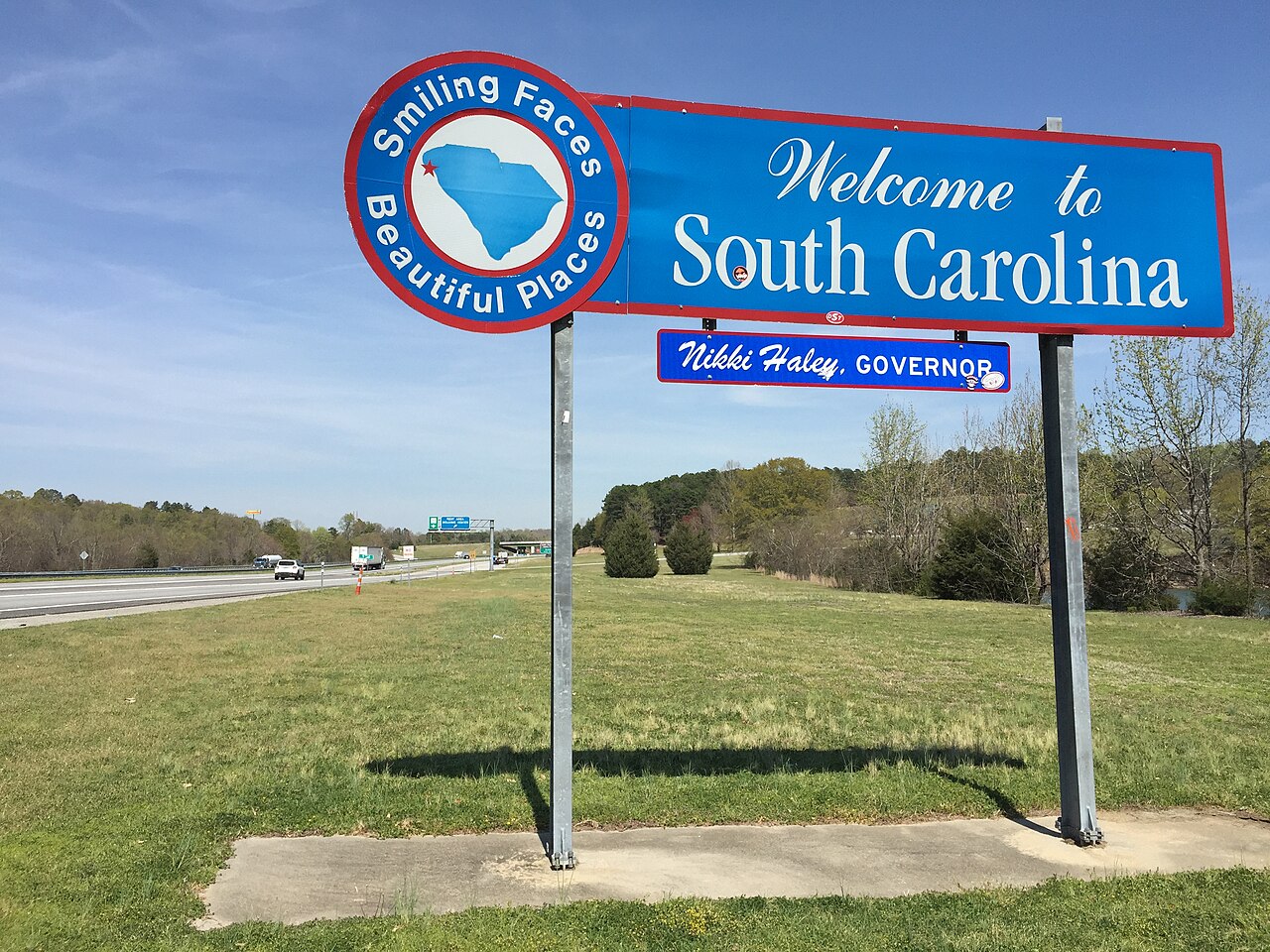
South Carolina is a permitless carry state. Since March 7, 2024, adults 18 and older who are not prohibited from having a firearm can carry a handgun openly or concealed without a permit. No training is required to carry.
South Carolina still issues the Concealed Weapons Permit (CWP), and the first permit is now free. This guide covers who can carry, why a CWP is still worth having, the training rule, reciprocity, open carry, vehicle carry, places you can’t carry, and South Carolina’s stand your ground law.
South Carolina Concealed Carry At A Glance
| Permitless carry | Yes, since March 7, 2024 |
|---|---|
| Minimum age to carry | 18 |
| Permit name | Concealed Weapons Permit (CWP) |
| Issued by | South Carolina Law Enforcement Division (SLED) |
| Permit fee | Free (renewal $50; fingerprints up to $5) |
| Permit length | 5 years |
| Training required | Yes: CWP only: handgun course within 3 years covering SC law and safety, with at least 25 rounds of live fire in the instructor's presence; no minimum hours. Not required for permitless carry. |
| Online course counts? | No, in-person training required |
| Non-resident permit | Limited (Only 'qualified nonresidents' who own real property in South Carolina) |
| Lifetime permit | No |
| States that honor it | About 30 (handgunlaw.us) |
| Last verified | November 2, 2026 |
Do You Need A Permit To Carry In South Carolina?
No. House Bill 3594, signed and effective March 7, 2024, made South Carolina a permitless carry state. The South Carolina Law Enforcement Division (SLED) says in its constitutional carry guidance that the law “allows individuals 18 years old and older to carry firearms openly or concealed without a permit.” You do not need any training to carry under this law.
Permitless carry only applies if you can legally possess a firearm. You cannot carry if state or federal law prohibits you from having a gun. Common reasons include:
- A felony conviction, or a conviction for a crime punishable by more than one year
- A domestic violence conviction or a qualifying protective order
- Being a fugitive from justice or an unlawful drug user
- Certain mental health adjudications or commitments
- Being under 18
Carrying unlawfully is a crime under S.C. Code § 16-23-20. According to SLED, a first offense is a misdemeanor with up to one year in jail and a $1,000 fine. A third or later offense is a felony.
Why Get A South Carolina Concealed Weapons Permit Anyway?
If you can carry without a permit, why bother? There are real reasons:
- Travel. Permitless carry stops at the state line. A CWP is honored by about 30 states, including North Carolina and Georgia.
- Buying guns. SLED says the CWP makes purchasing a firearm from a dealer easier.
- Sentencing protection. SLED notes that committing a crime with a concealable weapon without a CWP can add up to three years to a sentence. Valid CWP holders are excluded from that add-on.
- Cost. SLED may not charge any fee for the permit itself. You pay only for training and fingerprints.
- Training. The required course covers South Carolina’s deadly force law, which every carrier should know.
How To Get A South Carolina Concealed Weapons Permit
SLED issues the CWP. You must be at least 18. The 2024 law lowered the permit age from 21. Here is the process under S.C. Code § 23-31-215.
- Complete a qualifying training course. It must include at least 25 rounds of live fire in front of the instructor (details below).
- Gather your documents. You need a photocopy of your driver’s license or photo ID, proof of residence (or proof you own South Carolina real property, for qualified nonresidents), proof of vision or a valid South Carolina driver’s license, and your training certificate.
- Get fingerprinted. A law enforcement agency may charge up to $5 to take your prints.
- Apply to SLED. Submit the signed application with your documents and fingerprints.
- Wait for a decision. The sheriff has 10 working days to make a recommendation. SLED must issue the permit or deny it in writing within 90 days of receiving your application.
There is no fee for the permit itself. Renewal costs $50, which is waived for disabled veterans and retired law enforcement officers. A replacement card costs $5. Renewed permits are valid for five years, and handgunlaw.us reports the same five-year term for new permits.
You must report a lost or stolen permit to SLED within 48 hours and a change of address within 10 days.
Do You Need A Class For A South Carolina Carry Permit?
Not to carry. Permitless carry requires no training. But you do need a class to get a CWP.
Under S.C. Code § 23-31-210(4), “proof of training” means a basic or advanced handgun course completed within three years before you apply. The course must be offered by a law enforcement agency or a recognized gun safety organization and must cover:
- South Carolina statutory and case law on handguns and the use of deadly force
- Handgun use and safety, and storage practices that reduce accidental injury to children
- Actual live fire in the presence of the instructor, with “a minimum of twenty-five rounds”
- Holster use, carrying “cocked and locked,” responding to an attempt to take your firearm, and de-escalation
The old 8-hour minimum is gone, so there is no set number of hours. Because the live-fire portion must happen in front of an instructor, an online-only course cannot meet the CWP requirement. The statute does not say whether the classroom part may be taught online, so ask SLED or your instructor. Some people are exempt from parts of the training, including certain military members, retired officers, and certified instructors.
The 2024 law also tells SLED to offer a free CWP course in every county at least twice a month. SLED says that course depends on the General Assembly funding it. Check SLED’s site for current availability.
A short online safety course is a good first step before your in-person CWP class, or for anyone carrying under permitless carry. It does not count toward the CWP requirement and is not a permit.
Get Started On Your Permit Online
Watch a short instructional video on firearm safety and responsible carry, take a 10-question quiz, and download your certificate of completion.
Start The Free Online Safety Video →
The certificate is a training record, not a license or permit. In South Carolina, you apply for the Concealed Weapons Permit (CWP) through the South Carolina Law Enforcement Division (SLED).
Can Non-Residents Get A South Carolina Carry Permit?
Only in a limited case. South Carolina issues a CWP to a “qualified nonresident,” which § 23-31-210 defines as someone who owns real property in South Carolina but lives in another state. You apply with proof of property ownership and meet the same training rule.
Visitors may not need a permit at all. SLED’s guidance describes permitless carry for individuals “not otherwise prohibited from possessing a firearm,” and handgunlaw.us says anyone who can legally possess a concealable firearm can carry in South Carolina without a permit. Visitors must still follow South Carolina’s place restrictions.
Which States Honor The South Carolina Concealed Weapons Permit?
About 30 states honor a South Carolina CWP, according to handgunlaw.us. These include Georgia, North Carolina, Florida, Virginia, Texas, Ohio, Michigan, Indiana, Kentucky, and Louisiana. Handgunlaw.us reports that Minnesota began honoring South Carolina permits in 2025.
States that do not honor it include New York, New Jersey, California, Illinois, and Maryland. Pennsylvania’s official reciprocity page is internally inconsistent about South Carolina, so check with the Pennsylvania Attorney General before carrying there.
Under § 23-31-215(N), South Carolina honors permits from reciprocal states that require a background check and a firearms training course. Georgia and North Carolina permits are recognized automatically. Reciprocity covers handguns only. SLED keeps the official list, so check it before you rely on another state’s permit here.
Going next door? See our guides to North Carolina concealed carry laws and Georgia gun laws, or browse gun laws by state.
Can You Open Carry In South Carolina?
Yes. Since March 7, 2024, adults 18 and older who can legally possess a firearm may carry a handgun openly without a permit. A CWP holder may also open carry.
Open carry follows the same place rules as concealed carry. Section 16-23-20 bans carry in listed places “whether concealed or not.” Private businesses can also post signs or ask you to leave.
Can You Keep A Gun In Your Car In South Carolina?
Yes. Under S.C. Code § 16-23-20(D), a person who is not prohibited from carrying a firearm “may lawfully store a firearm anywhere in a vehicle whether occupied or unoccupied.” SLED says there are no restrictions on where a gun goes inside a vehicle.
Employer parking lots. Under § 23-31-220, employers may ban concealable weapons on business premises and in company-owned vehicles. The statute does not say how that interacts with your own car in the company lot. Check your employer’s written policy.
School parking lots. Under § 16-23-420, a firearm may stay in an attended or locked vehicle on school property if it is secured in a closed glove compartment, closed console, closed trunk, or a closed container secured by an integral fastener. Keep it there. Carrying it onto school grounds is a felony.
Where You Can’t Carry A Gun In South Carolina
Under S.C. Code § 16-23-20(A), you cannot carry a handgun, openly or concealed, with or without a permit, into:
- Law enforcement, correctional, or detention facilities
- Courthouses or courtrooms while court is in session
- Polling places on election days
- Offices or meetings of a county, school district, municipal, or special purpose district governing body
- School or college athletic events not related to firearms
- Daycare or preschool facilities
- Places where federal law bans firearms
- Churches or other religious sanctuaries, unless the church official or governing body gives express permission
- Hospitals, medical clinics, doctor’s offices, and other medical facilities, unless expressly authorized
- Another person’s home without the owner’s express permission
- Places clearly marked with a “NO CONCEALABLE WEAPONS ALLOWED” sign that meets § 23-31-235
Other restrictions:
- Schools and public buildings. § 16-23-420 bans firearms on school or college property and in any publicly owned building without express permission from the authorities in charge, except as described above for vehicles. It is a felony.
- Bars and restaurants. Under § 16-23-465, you may carry into a business that serves alcohol for on-premises consumption only if you do not drink. If the business posts a compliant sign or asks you to leave, you must comply. A CWP holder who violates this section loses the permit for five years.
Posted signs carry weight in South Carolina. Ignoring a compliant sign can be charged as trespass under § 16-11-620.
Duty to inform: No. SLED says permit holders and permitless carriers do not have to tell an officer they are carrying. South Carolina was a must-inform state before 2024, but the permitless carry law removed that duty. SLED also says possessing a firearm alone is not a reason for police to stop you.
South Carolina Castle Doctrine And Stand Your Ground Law
South Carolina’s Protection of Persons and Property Act is in S.C. Code §§ 16-11-410 through 16-11-450. It codifies the castle doctrine and extends it to occupied vehicles and places of business.
Castle doctrine. Under § 16-11-440(A), you are presumed to have a reasonable fear of death or great bodily injury when you use deadly force against someone unlawfully and forcibly entering, or who has entered, your dwelling, residence, or occupied vehicle. The presumption does not apply if the person has a right to be there, if you are engaged in unlawful activity, or if the person is a police officer you knew or should have known was an officer.
Stand your ground. Under § 16-11-440(C), if you are not engaged in unlawful activity and are attacked in a place where you have a right to be, you have “no duty to retreat and the right to stand your ground.” You may use deadly force if you reasonably believe it is necessary to prevent death, great bodily injury, or a violent crime.
Immunity. Under § 16-11-450, a person who uses deadly force as the act allows “is immune from criminal prosecution and civil action.” Police may not arrest you for using deadly force unless they have probable cause that the force was unlawful. If a court finds you immune, it must award your reasonable attorney fees, court costs, and lost income in a civil suit.
Even so, the law does not prevent an investigation, an arrest when police see probable cause, or a hearing to decide immunity. You may need a lawyer to prove you are immune. A legal defense can be expensive, even when you acted lawfully.
Protect Yourself After A Self-Defense Incident
CCW Safe is a self-defense legal protection membership. It pays criminal and civil defense costs upfront for members involved in a self-defense incident, so you aren't paying for a defense lawyer out of your own pocket.
South Carolina Gun Laws FAQ
Is South Carolina A Constitutional Carry State?
Yes. Since March 7, 2024, adults 18 and older who are not prohibited from having a firearm may carry openly or concealed without a permit.
How Much Does A South Carolina CWP Cost?
The permit itself is free. Expect to pay for your training course and up to $5 for fingerprints. Renewal costs $50, which is waived for disabled veterans and retired law enforcement.
How Old Do You Have To Be To Carry A Gun In South Carolina?
You must be 18 to carry without a permit or to apply for a CWP.
Can You Carry A Gun In Your Car In South Carolina Without A Permit?
Yes. If you can legally possess a firearm, you may store it anywhere in your vehicle, under § 16-23-20(D).
Can You Carry A Gun In Church In South Carolina?
Only with express permission from the church official or governing body. Section 16-23-20(A) bans carry in churches and religious sanctuaries otherwise, with or without a permit. Ask your church leadership for permission in writing. If your church has a volunteer safety team, look into legal protection for church security teams.
Can You Carry In A Restaurant That Serves Alcohol In South Carolina?
Yes, if you do not drink and the business has not posted a compliant sign or asked you to leave, under § 16-23-465.
Do You Have To Tell Police You Are Carrying In South Carolina?
No. SLED says there is no duty to inform, for permit holders or permitless carriers.
Sources
- SLED, H. 3594 Constitutional Carry Guidance
- S.C. Code Title 23, Chapter 31 (§§ 23-31-210, 23-31-215, 23-31-220, 23-31-235)
- S.C. Code Title 16, Chapter 23 (§§ 16-23-20, 16-23-420, 16-23-465)
- S.C. Code Title 16, Chapter 11 (§§ 16-11-410 to 16-11-450, 16-11-620)
- Pennsylvania Attorney General, Concealed Carry Agreements
- Handgunlaw.us, South Carolina (backup source)
- Handgunlaw.us, States My State Honors (backup source)