
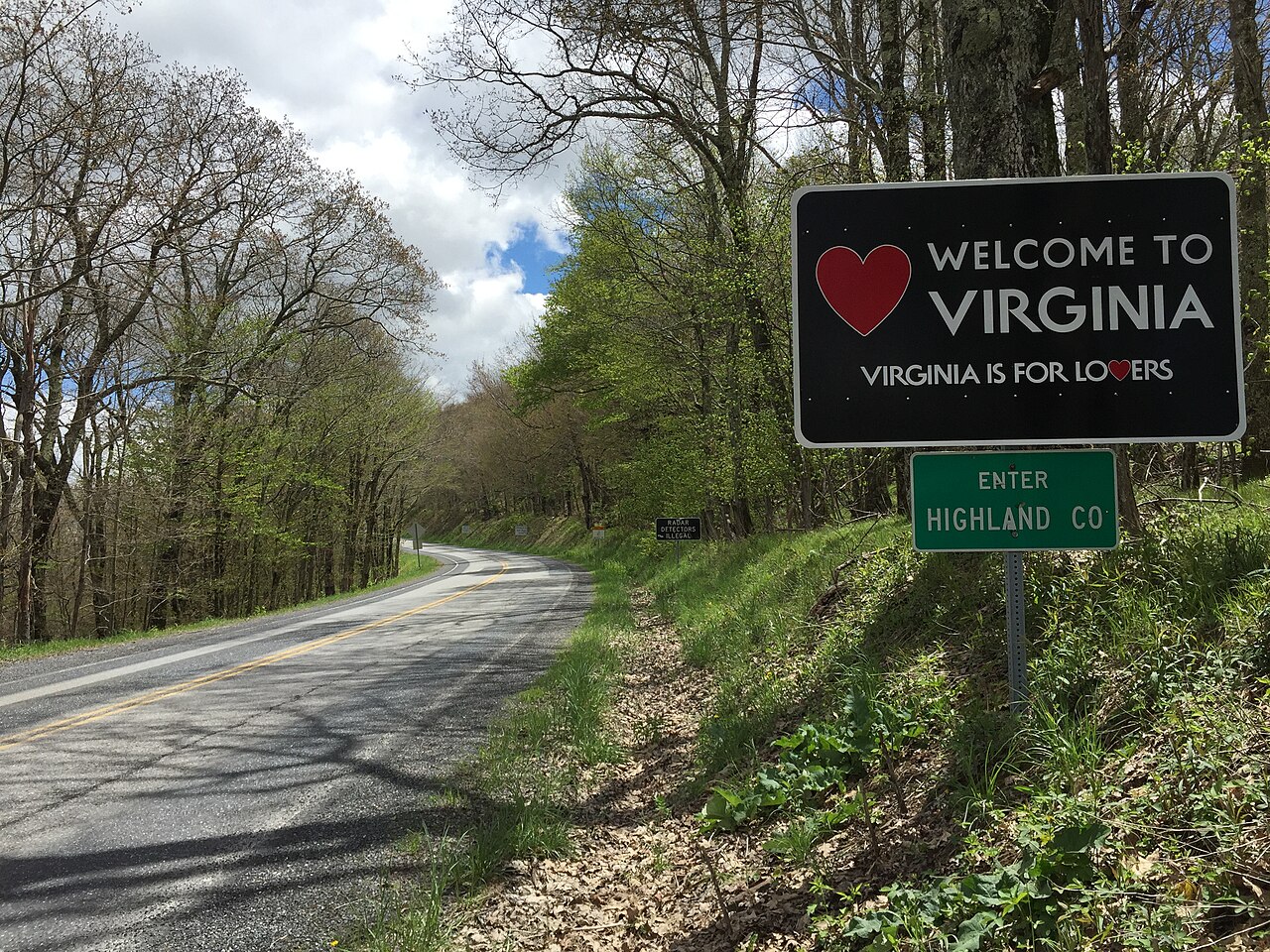
Virginia is not a permitless carry state. To carry a concealed handgun, you need a Virginia Concealed Handgun Permit (or an out-of-state permit Virginia recognizes), and you must be 21. Open carry without a permit is legal for adults, but many localities restrict it in certain places.
This guide covers the permit process, Virginia’s in-person training rule, non-resident permits, reciprocity and the 2027 change coming to it, open carry, guns in cars, off-limits places, and Virginia’s self-defense law.
Virginia Concealed Carry At A Glance
| Permitless carry | No |
|---|---|
| Minimum age to carry | 21 |
| Permit name | Concealed Handgun Permit (CHP) |
| Issued by | Circuit court (residents); Virginia State Police (non-residents) |
| Permit fee | Up to $50 resident / up to $100 non-resident |
| Permit length | 5 years |
| Training required | Yes: In-person demonstration of handgun competence by one of the methods in Va. Code § 18.2-308.02(B); no hour minimum. |
| Online course counts? | No, in-person training required |
| Non-resident permit | Yes (Issued by Virginia State Police; age 21+; in-person competence; up to $100.) |
| Lifetime permit | No |
| States that honor it | About 36 (USCCA) |
| Last verified | November 2, 2026 |
Do You Need A Permit To Carry In Virginia?
Yes, to carry concealed. Va. Code § 18.2-308 makes carrying a concealed handgun a crime unless an exception applies. The main exceptions are a valid permit, your own home or place of business, and a handgun secured in a container or compartment in your personal vehicle.
A permit is denied under § 18.2-308.09 to people who:
- Are barred from having a firearm under state or federal law.
- Have a DUI or public drunkenness conviction in the last three years.
- Have an assault, assault and battery, sexual battery or brandishing conviction in the last three years, or any stalking conviction.
- Have two or more misdemeanor convictions in the last five years, if at least one was Class 1.
- Use or are addicted to marijuana or controlled substances, or have certain drug convictions in the last three years.
- Are subject to a protective order, are fugitives, or had a dishonorable discharge.
- Had certain mental health commitments or residential treatment in the last five years.
How To Get A Virginia Concealed Handgun Permit
Resident permits are issued by the circuit court of the county or city where you live. The Virginia State Police resident permit page links the application form (SP-248). Here is the process:
- Meet the basics. You must be at least 21 and not disqualified under § 18.2-308.09.
- Get proof of competence. Take a qualifying in-person course or use another approved method (see below).
- Apply to the circuit court clerk. Under § 18.2-308.02, you may apply in writing or electronically. Bring one government-issued photo ID and your proof of competence.
- Wait for the court. The court should issue the permit within 45 days of a complete application. If it has not acted by then, the clerk certifies the application, which works as a de facto permit for 90 days.
Cost: No more than $50 total under § 18.2-308.03: $10 to the clerk, up to $35 for the local background check, and up to $5 for the State Police.
Term and renewal: Five years. State Police say to file your renewal 90 to 180 days before expiration, and renewals may be mailed.
Do You Need A Class For A Virginia Carry Permit?
Yes. Since January 1, 2021, § 18.2-308.02(B) has required proof that you “demonstrated competence with a handgun in person.” Online-only courses no longer count. Any one of these works:
- A hunter education or safety course approved by the Virginia Department of Wildlife Resources or a similar agency in another state.
- An NRA or USCCA firearms safety or training course.
- A firearms course offered to the public by a law enforcement agency, college or other organization that uses NRA, USCCA or DCJS-certified instructors.
- An in-person course taught by a state, NRA or USCCA-certified instructor.
- A law enforcement-style course for security guards, investigators or similar roles, or a police training course.
- Organized shooting competition, current military service, or an honorable discharge.
- A current or past Virginia or local carry license that was not revoked for cause.
- Other in-person training the court considers adequate.
The statute sets no hour minimum, and it does not expressly require live fire. Proof of competence does not expire, and the court may not demand any extra demonstration.
A 2026 bill, HB 916 (Chapter 438), would broaden the course option and drop the NRA or USCCA requirement for it. According to its bill record, it does not take effect unless the 2027 General Assembly reenacts it. For now, the rule above still applies.
An online course alone will not qualify you for a Virginia permit. It can still be a good first step on safety and handling before you take the required in-person class.
Get Started On Your Permit Online
Watch a short instructional video on firearm safety and responsible carry, take a 10-question quiz, and download your certificate of completion.
Start The Free Online Safety Video →
The certificate is a training record, not a license or permit. In Virginia, you apply for the Concealed Handgun Permit (CHP) through the Circuit court (residents); Virginia State Police (non-residents).
Can Non-Residents Get A Virginia Carry Permit?
Yes. The Virginia State Police issue non-resident permits under § 18.2-308.06.
- You must be at least 21.
- You must show competence with a handgun in person, using the same kinds of options residents use.
- You submit fingerprints on the State Police card and two photos.
- The fee is up to $100, and the permit lasts five years.
Which States Honor The Virginia Concealed Handgun Permit?
About 36 states honor or accept the Virginia permit, according to USCCA’s reciprocity map (a non-official source). Some honor only resident permits, and some set an age of 21. Notable states that do not honor it include California, New York, New Jersey, Illinois, Maryland and Massachusetts.
Today, Virginia recognizes permits from all 50 states, D.C. and the U.S. territories under § 18.2-308.014. The holder must be at least 21, carry government photo ID, show the permit and ID on demand, and never have had a Virginia permit revoked, according to the State Police reciprocity page.
Change coming July 1, 2027: SB 115 (2026, Chapter 879) rewrites § 18.2-308.014. Virginia will then recognize only permits from states whose laws are “substantially similar” to Virginia’s for keeping permits from prohibited persons, as determined by the Attorney General and published by the State Police. Virginia residents will also no longer be able to use another state’s permit to carry in Virginia.
Going next door? Read our guides for North Carolina, Tennessee, Kentucky, West Virginia and Maryland, or see all state gun laws.
Can You Open Carry In Virginia?
Yes. No permit is needed to openly carry a handgun if you can legally possess it. Handgunlaw.us lists the minimum age as 18.
Local rules matter. Under § 15.2-915(E), a city or county may ban firearms in its government buildings, public parks, recreation and community centers, and on streets used for permitted events. Those bans must be posted at entrances.
Some rifles and pistols face extra limits. Today, § 18.2-287.4 bars carrying certain loaded semi-automatic firearms in public places in listed localities, with an exemption for permit holders. The Code shows a version effective July 1, 2027 that applies statewide to “assault firearms” and drops the permit holder exemption.
Can You Keep A Gun In Your Car In Virginia?
Yes. Under § 18.2-308(C)(8), anyone who may lawfully possess a firearm can keep a handgun in a personal vehicle if it is “secured in a container or compartment.” A closed glove box or console works, and no permit is needed. Permit holders may carry on their person in the car.
- Leaving the car: A 2026 law, § 18.2-308.7:2, bans leaving a handgun in an unattended vehicle unless it is out of plain view in a locked, hard-sided container. A locked glove box or locked center console counts. A violation is a Class 4 misdemeanor.
- Work parking lots: Under § 15.2-915(A), a locality may not stop its own employees from storing a lawful firearm in a locked private vehicle at work, with limited exceptions. We found no Virginia law covering private employers, so check your company’s policy.
- School parking lots: § 18.2-308.1 lets permit holders have a concealed handgun in a vehicle in a school parking lot, traffic circle or entry and exit route. Without a permit, the firearm must be unloaded and in a closed container, such as a locked trunk.
Where You Can’t Carry A Gun In Virginia
- K-12 schools, child day centers and preschools, school buses and school-sponsored events (§ 18.2-308.1).
- Courthouses (§ 18.2-283.1).
- Air carrier airport terminals, except to check or claim a firearm with your luggage (§ 18.2-287.01).
- Within 100 feet of a polling place while the polls are open, during ballot counting, and one hour before and after (§ 24.2-604).
- Hospitals that provide mental health or developmental services, including emergency departments, when posted (§ 18.2-283.3, new in 2026).
- Places of worship during a religious meeting, without “good and sufficient reason” (§ 18.2-283).
- Local government buildings, parks, recreation centers and permitted events where a locality has posted a ban (§ 15.2-915(E)).
- Anywhere while under the influence of alcohol, marijuana or illegal drugs in public, if you are a permit holder (§ 18.2-308.012).
- Private property where the owner bans firearms, and federal property where federal law bans them.
Permit holders may carry concealed into restaurants and clubs licensed to serve alcohol, but may not drink there while carrying (§ 18.2-308.012(B)).
Duty to inform: Virginia does not require you to tell an officer you are armed. Under § 18.2-308.01, a permit holder must have the permit on them while carrying concealed and show it, with government photo ID, when an officer asks. Failing to do so carries a $25 civil penalty.
Virginia Castle Doctrine And Stand Your Ground Law
Virginia has no castle doctrine or stand your ground statute. Self-defense is governed by court-made common law, as Handgunlaw.us (non-official) summarizes it.
- Deadly force: Generally justified only against an imminent threat when you reasonably fear death or serious bodily harm.
- Retreat: Handgunlaw.us describes Virginia as a stand your ground state under case law. A person who provoked the fight must retreat first.
- Home: Handgunlaw.us notes Virginia has no true castle doctrine law, so defense in your home is judged under the same common-law rules.
- Civil immunity: We found no Virginia statute that grants civil immunity for justified self-defense.
Because the rules come from case law, outcomes depend heavily on the facts. You can be arrested and charged even if you acted in self-defense, and a defense can be expensive. Self-defense legal protection is one way to plan for that.
Protect Yourself After A Self-Defense Incident
CCW Safe is a self-defense legal protection membership. It pays criminal and civil defense costs upfront for members involved in a self-defense incident, so you aren't paying for a defense lawyer out of your own pocket.
Virginia Gun Laws FAQ
Is Virginia A Constitutional Carry State?
No. Virginia requires a permit to carry a concealed handgun. Open carry without a permit is legal, subject to local and location limits.
How Much Is A Virginia Concealed Carry Permit?
No more than $50 for a resident permit. Non-resident permits from the State Police cost up to $100.
Can You Take An Online Class For A Virginia Concealed Carry Permit?
Not by itself. Since 2021, Virginia requires competence to be shown in person.
Can You Carry A Gun In Church In Virginia?
Under § 18.2-283, carrying a weapon to a place of worship while a religious meeting is being held is a Class 4 misdemeanor unless you have “good and sufficient reason.” The law does not define that phrase, so talk with church leadership and a Virginia attorney before you carry. Churches that want an armed safety team should look into legal protection for church security teams.
What Are The New Virginia Gun Laws In 2026?
Carry-related changes include the unattended vehicle storage rule (§ 18.2-308.7:2), the hospital ban (§ 18.2-283.3), and electronic permit applications. Reciprocity narrows on July 1, 2027 under SB 115. HB 916’s training change needs reenactment in 2027.
Does Virginia Honor Other States’ Concealed Carry Permits?
Yes, for now. Virginia honors every state’s permit for holders 21 and older. That changes July 1, 2027.
Sources
- Va. Code § 18.2-308, Carrying concealed weapons
- Va. Code § 18.2-308.01, Permit display
- Va. Code § 18.2-308.02, Application and competence
- Va. Code § 18.2-308.06, Non-resident permits
- Va. Code § 18.2-308.09, Disqualifications
- Va. Code § 18.2-308.012, Prohibited conduct
- Va. Code § 18.2-308.014, Out-of-state permits
- Va. Code § 18.2-308.1, School property
- Va. Code § 18.2-308.7:2, Handguns in unattended vehicles
- Va. Code § 18.2-283, Places of worship
- Va. Code § 18.2-283.1, Courthouses
- Va. Code § 18.2-283.3, Hospitals providing mental health services
- Va. Code § 18.2-287.01, Airport terminals
- Va. Code § 18.2-287.4, Carrying certain firearms in public places
- Va. Code § 24.2-604, Polling places
- Va. Code § 15.2-915, Local firearm regulation
- Virginia State Police, Resident Concealed Handgun Permits
- Virginia State Police, Reciprocity and Recognition
- PolicyRisk, HB 916 (2026) bill record (non-official, backup)
- USCCA, Virginia reciprocity map (non-official, backup)
- Handgunlaw.us, Virginia summary (non-official, backup)