
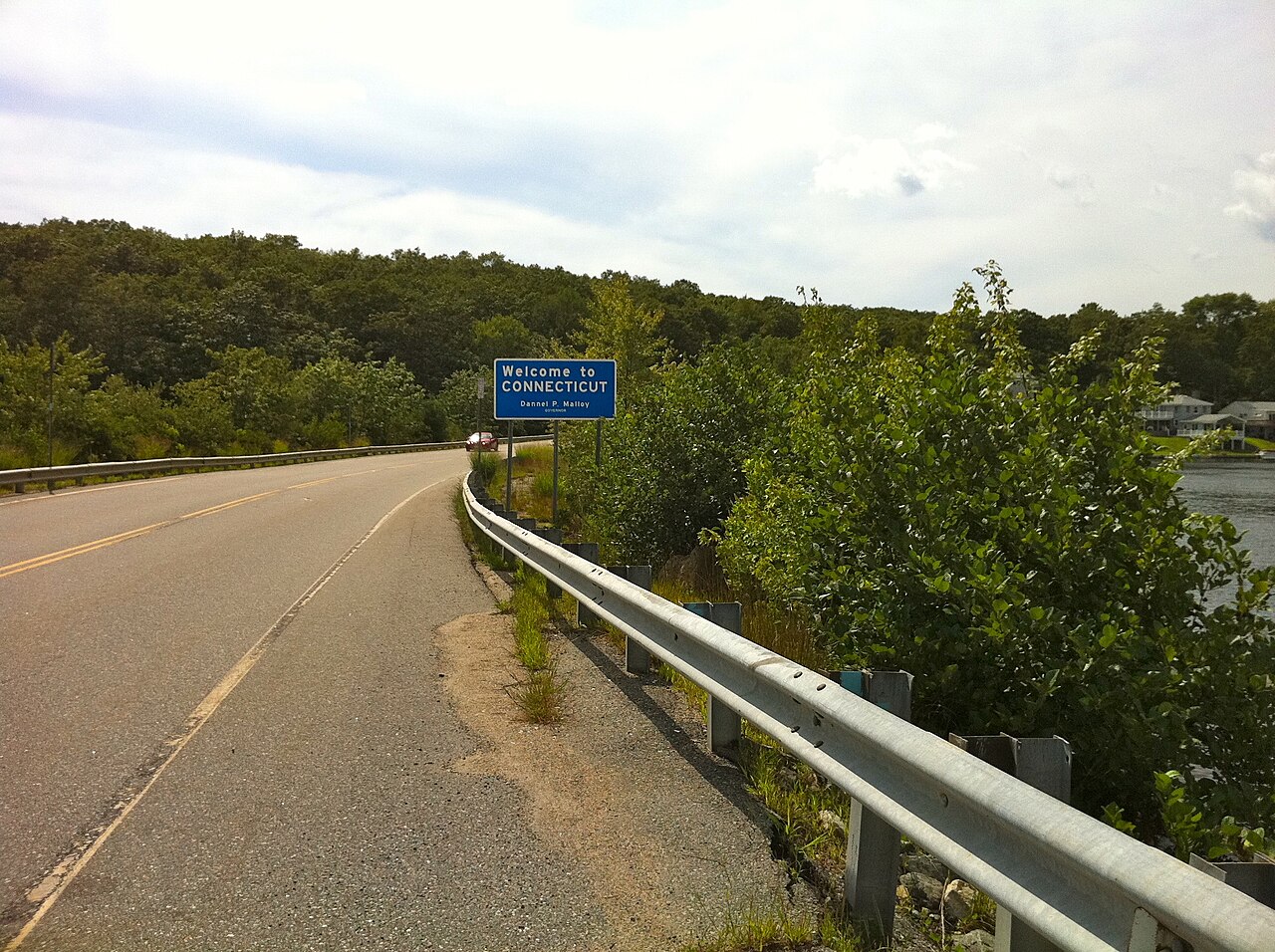
Connecticut is not a permitless carry state. To carry a handgun in public, you need a State Permit to Carry Pistols and Revolvers, often called the Connecticut pistol permit. You must be at least 21 to get one.
This guide covers Connecticut gun laws for carrying a handgun. You will learn how the two-step permit process works, what the required class includes, where you can’t carry, how open carry and vehicle carry work, and how Connecticut’s self-defense law treats deadly force.
Connecticut Concealed Carry At A Glance
| Permitless carry | No |
|---|---|
| Minimum age to carry | 21 |
| Permit name | State Permit to Carry Pistols and Revolvers (State Pistol Permit) |
| Issued by | Local permitting authority (temporary permit), then DESPP Special Licensing and Firearms Unit (state permit) |
| Permit fee | $140 total ($70 local temporary + $70 state) plus fingerprint/background fees; $70 renewal |
| Permit length | 5 years |
| Training required | Yes: Course at least equal to NRA Basic Pistol with live fire (semi-auto or revolver) and approved instructor, plus DESPP PA 23-53 addendum on storage, use and public carry; training valid 2 years (C.G.S. § 29-28). |
| Online course counts? | No, in-person training required |
| Non-resident permit | Yes (Nonresidents who hold a home-state (or other state) carry permit apply directly to DESPP SLFU (SLFU.OOS@ct.gov)) |
| Lifetime permit | No |
| States that honor it | About 30 per USCCA list (USCCA headline says 27); CT honors none |
| Last verified | November 2, 2026 |
Do You Need A Permit To Carry In Connecticut?
Yes. Under C.G.S. § 29-35, you may not carry a pistol or revolver on your person without a permit.
The only general exceptions are inside your home, on land you own or lease, and at your place of business. Connecticut does not honor carry permits from any other state.
To qualify for a permit, you must be at least 21 and a legal resident of the United States. According to the Connecticut State Police, you are disqualified if you have:
- A felony conviction, or a conviction for any of 11 listed misdemeanors
- Certain juvenile adjudications
- Certain mental health commitments or findings
- Certain restraining or protective orders, or a firearms seizure order
- Illegal presence in the United States
The issuing authority can also deny or revoke a permit under a “suitability” clause. Denials can be appealed to the Board of Firearms Permit Examiners within 90 days.
How To Get A Connecticut Pistol Permit
Connecticut uses a two-step process for residents. You first get a temporary state permit from your town. You then trade it in for the five-year state permit from the Department of Emergency Services and Public Protection (DESPP).
- Take an approved handgun safety course. It must include live fire and the DESPP addendum covered in the next section.
- Apply to your local permitting authority. This is the police chief in your town. In towns without a police department, it is the town’s chief executive officer or a designee, such as a resident state trooper. Public Act 25-18 set this rule, effective October 1, 2025. The application is form DPS-799-C.
- Submit fingerprints, photos and proof of lawful presence. A birth certificate or U.S. passport works for citizens. The town runs a criminal history check and a background investigation.
- Wait for the local decision. The local authority has 8 weeks to approve or deny. If approved, you get a temporary state permit that is valid for 60 days.
- Get your state permit. Within those 60 days, take the temporary permit to a DESPP Special Licensing and Firearms Unit (SLFU) office. You pay the state fee there and receive your permit.
Cost: The statutory fee is $140 in total: $70 for the local temporary permit and $70 for the state permit. Fingerprint and background check fees are extra.
For example, the Town of Lebanon lists $75 for the state check and $13.25 for the FBI check. Ask your town for its current amounts.
Term and renewal: The state permit lasts five years. Renewal costs $70 and is done by mail or online.
DESPP mails a renewal notice about 90 days before expiration. There is a 90-day grace period, but a permit expired longer than that will not be renewed.
Full details are on the DESPP State Pistol Permit page.
Do You Need A Class For A Connecticut Carry Permit?
Yes. You must complete a handgun safety course before you apply. Connecticut sets no fixed number of hours, but the rules are strict:
- The course must be at least equal to the NRA Basic Pistol Course.
- The NRA Home Firearms Safety course and the First Steps Pistol Orientation are not accepted.
- Live fire is required. Dry fire, simulators, computer programs, plastic bullets and air guns do not count.
- You must fire a semi-automatic pistol or a revolver.
- The instructor must be approved. DESPP posts a list of approved instructors.
Public Act 23-53 added more. For applications filed on or after July 1, 2024, the course must also cover safe storage at home and in vehicles, lawful use of a firearm, and lawful carry in public.
This uses a standard DESPP addendum signed by you and the instructor. Your training is only good for two years.
Because live fire is required, an online-only course does not meet Connecticut’s training rule. You must take the range portion in person with an approved instructor.
If you are new to handguns, a short online safety course can be a good primer before you sign up for the required class. It does not replace that class, and it is not a permit.
Get Started On Your Permit Online
Watch a short instructional video on firearm safety and responsible carry, take a 10-question quiz, and download your certificate of completion.
Start The Free Online Safety Video →
The certificate is a training record, not a license or permit. In Connecticut, you apply for the State Permit to Carry Pistols and Revolvers (State Pistol Permit) through the Local permitting authority (temporary permit), then DESPP Special Licensing and Firearms Unit (state permit).
Can Non-Residents Get A Connecticut Carry Permit?
Yes. A U.S. resident who lives outside Connecticut can apply for a nonresident state pistol permit. You must already hold a carry permit from your home state or another state.
Nonresidents skip the local step and apply directly to the Connecticut State Police. To request an application, email SLFU.OOS@ct.gov with your full name and mailing address. Ask SLFU about current nonresident fees and training rules before you apply.
Which States Honor The Connecticut Pistol Permit?
Connecticut honors no other state’s carry permit. Visitors who want to carry must get a Connecticut nonresident permit.
Many other states do accept the Connecticut permit. USCCA’s reciprocity map lists 30 states, including Florida, Texas, Georgia, Ohio and Michigan.
Its own headline count says 27, so check each state before you travel. None of Connecticut’s direct neighbors honor the permit.
Going next door? See our New York gun laws, Massachusetts gun laws and Rhode Island gun laws guides, or browse gun laws by state.
Can You Open Carry In Connecticut?
Not in practice. Since Public Act 23-53, C.G.S. § 29-35(a)(2) bars anyone from knowingly carrying a firearm with intent to display it.
This applies to permit holders too. You must take reasonable steps to conceal your gun.
A brief glimpse of the gun or its outline through clothing is not a violation. Showing it during lawful self-defense is also not a violation. The open carry ban does not apply at home, on land you own or lease, at your business, or during training or hunting.
Can You Keep A Gun In Your Car In Connecticut?
Yes, if you have a permit. A permit holder can carry a loaded handgun in a vehicle, concealed on the body.
Without a permit, you may only transport a handgun in limited cases under § 29-35, such as to a repair shop or after a purchase. The gun must be unloaded and not reachable from the passenger area. If the car has no trunk, use a locked container other than the glove box or console.
Leaving a gun in a parked car has its own rule. Under C.G.S. § 29-38g, a handgun in an unattended vehicle must be in the trunk, a locked safe or a locked glove box. A hatchback, SUV or station wagon cargo area does not count as a trunk.
- Employer parking lots: Connecticut has no law that protects employees who keep guns in their cars at work, according to USCCA. Your employer’s policy controls.
- School parking lots: The school-grounds ban covers the school’s real property, and it has no exception for permit holders or guns left in a car. Do not drive onto school property with a gun.
Where You Can’t Carry A Gun In Connecticut
A permit does not let you carry where state law or the property owner forbids it (C.G.S. § 29-28(e)). Off-limits places include:
- Public and private K-12 schools and school-sponsored activities. This is a class D felony, with no exception for permit holders (C.G.S. § 53a-217b).
- Legislative buildings, meaning any building with a General Assembly chamber, legislators’ offices or a committee hearing (C.G.S. § 2-1e).
- State parks and forests, except for limited hunting and other approved uses (Regs. Conn. State Agencies § 23-4-1(c)).
- Any place you are under the influence. Carrying with a 0.08 blood alcohol level or while impaired by drugs is a crime (C.G.S. § 53-206d).
- Private property where the owner prohibits guns, including posted businesses (C.G.S. § 29-28(e)).
- Federal facilities, including federal courthouses and post offices (18 U.S.C. § 930).
Duty to inform: Connecticut does not require you to tell police first that you are armed. But you must carry your permit whenever you carry. If an officer sees your gun and has reasonable suspicion of a crime, you must show your permit on request (C.G.S. § 29-35(b)).
Connecticut Castle Doctrine And Stand Your Ground Law
Connecticut is not a stand your ground state. Under C.G.S. § 53a-19, you may use deadly force only if you reasonably believe the other person is using or about to use deadly force, or is about to inflict great bodily harm.
You have a duty to retreat in public. Deadly force is not justified if you know you can avoid it with complete safety by retreating. That duty does not apply in your own home or at your place of work, unless you were the initial aggressor.
The castle doctrine piece is in C.G.S. § 53a-20. You may use deadly force against an intruder to stop a forcible, unlawful entry into your home or workplace. You may also use it to prevent arson or a violent crime, or in defense of a person.
A self-defense law does not stop police from arresting you or a prosecutor from filing charges. Even a clear case can lead to a costly legal defense.
Protect Yourself After A Self-Defense Incident
CCW Safe is a self-defense legal protection membership. It pays criminal and civil defense costs upfront for members involved in a self-defense incident, so you aren't paying for a defense lawyer out of your own pocket.
Connecticut Gun Laws FAQ
Is Connecticut A Constitutional Carry State?
No. You need a Connecticut state pistol permit to carry a handgun outside your home, land or business. The minimum age is 21.
How Long Does It Take To Get A Pistol Permit In Connecticut?
The local authority has 8 weeks to act on the temporary permit. After that, you have 60 days to pick up your state permit at an SLFU office. Plan for at least two to three months in total.
How Much Does A Connecticut Concealed Carry Permit Cost?
The permit fees are $140 total: $70 local and $70 state. Fingerprint and background check fees are added on top. Renewal is $70 every five years.
Can You Carry A Gun In A Bar In Connecticut?
No state law bans permit holders from bars or restaurants that serve alcohol. But you may not carry while impaired or at a 0.08 blood alcohol level (C.G.S. § 53-206d). The owner can also ban guns.
Does Connecticut Honor Other States’ Concealed Carry Permits?
No. Connecticut honors no out-of-state permits. Visitors must hold a Connecticut nonresident permit to carry.
Can You Carry A Gun In Church In Connecticut?
No Connecticut law bans permit holders from places of worship. A church can still ban guns on its property, and a permit does not override that (C.G.S. § 29-28(e)).
If the church runs a K-12 school, the school-grounds ban applies there. Churches that use armed volunteers should look into legal protection for church security teams.
Sources
- Connecticut DESPP: State Pistol Permit
- Connecticut DESPP: Pistol Permit FAQ
- Connecticut DESPP: Letter to Instructors on Public Act 23-53
- Connecticut DESPP: Public Act 23-53 Training Slides
- Connecticut General Assembly: Public Act 25-18
- Connecticut Office of Legislative Research: Firearms in State Parks and Forests
- Connecticut Board of Firearms Permit Examiners: Laws Pertaining to Firearms
- Town of Lebanon: Pistol Permits (fingerprint fees)
- C.G.S. § 29-35 (Justia mirror)
- C.G.S. § 29-30 (Justia mirror)
- C.G.S. § 29-38g (Justia mirror)
- C.G.S. § 53a-217b (Justia mirror)
- C.G.S. § 53a-19 (Justia mirror)
- C.G.S. § 53a-20 (Justia mirror)
- C.G.S. § 2-1e (FindLaw mirror)
- USCCA: Connecticut Reciprocity Map (secondary source)