
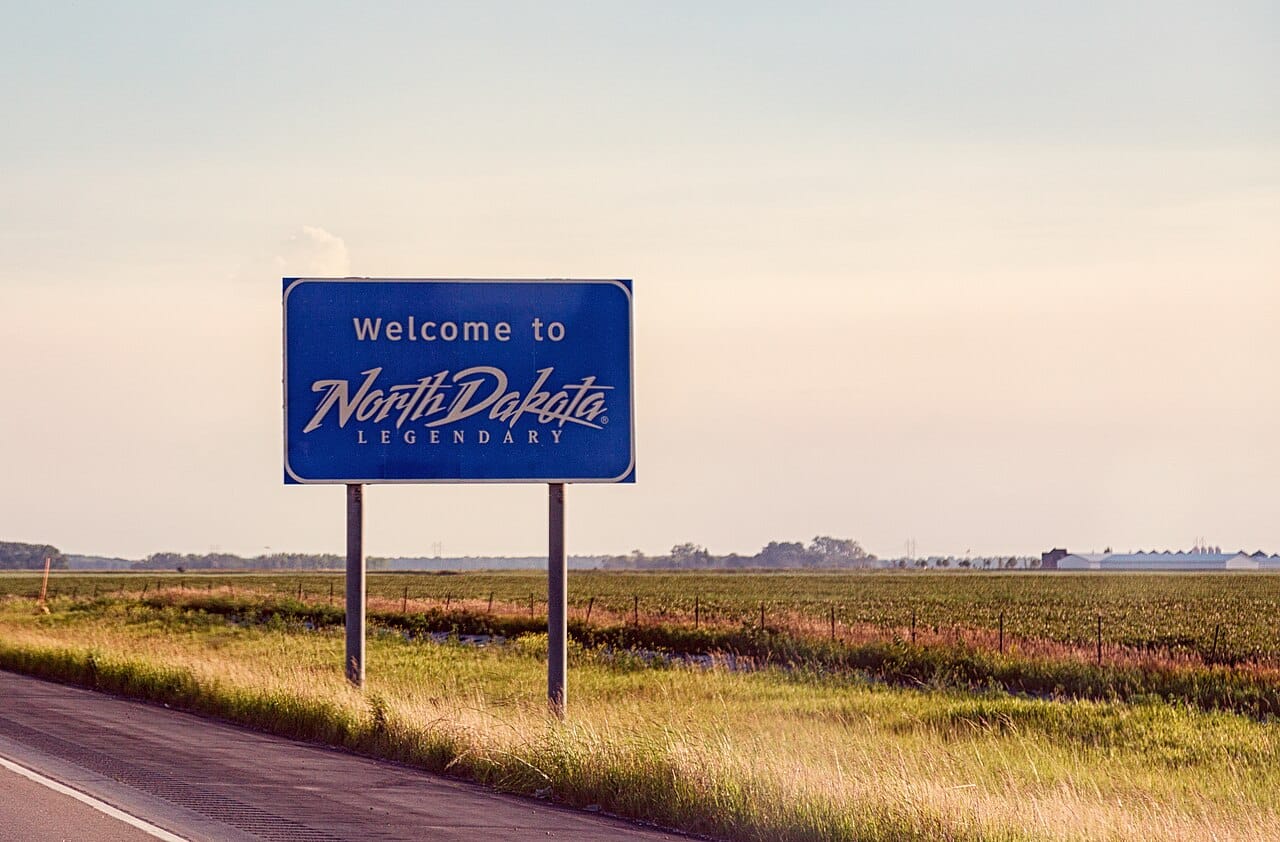
North Dakota is a permitless carry state. Adults 18 and older who could qualify for a Class 2 concealed weapon license, and who carry a valid driver’s license or state ID, may carry a concealed handgun without a license. Since a 2023 law, that includes visitors from other states, not just residents.
This guide covers who can carry, the difference between Class 1 and Class 2 licenses, how to apply, reciprocity, open carry, guns in cars, off-limits places, and North Dakota’s stand your ground law.
North Dakota Concealed Carry At A Glance
| Permitless carry | Yes, since 2017 (residents); 2023 (non-residents) |
|---|---|
| Minimum age to carry | 18 |
| Permit name | Concealed Weapon License (Class 1 or Class 2) |
| Issued by | ND Attorney General, Bureau of Criminal Investigation |
| Permit fee | $60 (plus up to $100 to the test administrator) |
| Permit length | 5 years |
| Training required | Yes: Class 1: classroom, open-book test and shooting test; Class 2: open-book test only; all done in North Dakota. |
| Online course counts? | No, in-person training required |
| Non-resident permit | Limited (Non-residents need a home-state license from a reciprocity state and must test in ND; visitors may also carry permitless.) |
| Lifetime permit | No |
| States that honor it | 39 (Class 1); 26 (Class 2) |
| Last verified | November 2, 2026 |
Do You Need A Permit To Carry In North Dakota?
No, if you qualify. Under NDCC 62.1-04-02(2), a person who is “not otherwise precluded from possessing a class 2 firearm and dangerous weapon license” may carry concealed. You also need a valid driver’s license or nondriver ID from North Dakota or from your home state.
That means you must meet the Class 2 standards, including being at least 18. The Attorney General’s eligibility page lists the basics:
- A U.S. citizen or legal permanent resident.
- Legally allowed to possess a firearm under state and federal law.
- No disqualifying offense under NDCC 62.1-04-03.
If you have any doubt about your record, applying for a license is one way to get a clear answer from the Bureau of Criminal Investigation (BCI).
Why Get A North Dakota Concealed Weapon License Anyway?
The Attorney General’s license FAQ is plain about it: permitless carry only works inside North Dakota. A license helps in a few ways:
- Travel. Other states honor a North Dakota license, not North Dakota’s permitless law. A Class 1 license is honored in far more states than a Class 2.
- A clear background check. Passing the BCI and FBI check confirms you are eligible.
- Some job and volunteer roles. For example, NDCC 62.1-02-05 lets on-duty ambulance and fire crew members carry in otherwise restricted places only if they hold a Class 1 license and meet other conditions.
Inside North Dakota, both classes carry the same rights. NDCC 62.1-04-02 says the difference “is only the extent” to which other states recognize them.
How To Get A North Dakota Concealed Weapon License
The Attorney General’s BCI issues licenses under NDCC 62.1-04-03. The BCI concealed weapon license page lays out four steps:
- Find a test administrator. Only BCI-authorized test administrators may give the training and tests, and all of it must happen in North Dakota.
- Complete the application. Apply online, then print, sign and date the final page. A paper version is also available.
- Gather your documents. The BCI posts a checklist. Unsigned applications are returned.
- Mail it to the BCI. Send it to BCI-CWL, PO Box 1054, Bismarck, ND 58502. Fax and email are not accepted.
Cost: $60, paid by cashier’s check or money order to the ND Attorney General. Test administrators may charge up to $100 for their part.
Processing: The BCI must decide within 60 days of a properly completed application. It cannot give status updates, so send it by certified mail if you want proof it arrived.
Age: 21 for Class 1 and 18 for Class 2. An alcohol-related conviction in the last three years rules out Class 1, though you may still apply for Class 2.
Do You Need A Class For A North Dakota Carry Permit?
No class is needed to carry permitless. For a license, NDCC 62.1-04-03 sets two levels of testing:
- Class 1: Classroom instruction on weapon safety and North Dakota deadly force law, an open-book test, a demonstration of firearm familiarity, and “an actual shooting or certified proficiency exercise.”
- Class 2: The open-book test only. No shooting test.
All training and testing must be done in North Dakota by a BCI-authorized test administrator. Out-of-state or online training does not transfer, so an online course does not meet North Dakota’s license requirement.
The test is open book, and the BCI publishes the Concealed Weapon License Manual it is based on. A short online safety course can be a good primer on handling and storage before you sit for the test or the Class 1 shoot.
Get Started On Your Permit Online
Watch a short instructional video on firearm safety and responsible carry, take a 10-question quiz, and download your certificate of completion.
Start The Free Online Safety Video →
The certificate is a training record, not a license or permit. In North Dakota, you apply for the Concealed Weapon License (Class 1 or Class 2) through the ND Attorney General, Bureau of Criminal Investigation.
North Dakota License Renewal Rules
Licenses last five years, and the renewal rules differ by class:
- Class 1: You must complete all Class 1 training and testing again within 30 days before you apply.
- Class 2: No new testing, but the renewal must be filed within the six months before expiration.
- Expired licenses: An expired license cannot be renewed. You must reapply as a new applicant and retest.
Can Non-Residents Get A North Dakota Carry Permit?
Yes, with a catch. Under NDCC 62.1-04-03(1)(b), a non-resident needs a valid home-state driver’s license or ID with a residential address, plus a valid concealed weapons license from their home state. That home state must have reciprocity with North Dakota.
Non-residents must still complete the training and testing inside North Dakota. Active-duty military stationed in the state may also apply.
Most visitors will not need a license to carry here. Since the 2023 change, a visitor who meets the Class 2 standards and has a valid home-state driver’s license or ID may carry concealed under NDCC 62.1-04-02(2).
Which States Honor The North Dakota Concealed Weapon License?
The Attorney General’s reciprocity page lists 39 states for a Class 1 license and 26 states for a Class 2 license. Every Class 2 state is also on the Class 1 list.
Class 1 states include Arizona, Colorado, Florida, Michigan, Minnesota, Missouri, Pennsylvania, Texas, Virginia and Wisconsin, among others. Notable states that do not appear on either list include California, Illinois, New York, New Jersey, Maryland and Massachusetts.
That page was last updated in January 2024, and states change their lists. For example, Nevada’s 2026 recognition list honors North Dakota Class 1 licenses only.
Some Class 2 states also require holders to be 21. Always confirm with the state you are visiting.
North Dakota, in turn, honors resident and non-resident licenses from states that recognize a North Dakota license, under NDCC 62.1-04-03.1.
Going next door? Read our guides for Minnesota, South Dakota and Montana, or see all state gun laws.
Can You Open Carry In North Dakota?
Yes, for most adults who can carry concealed. The base rule in NDCC 62.1-03-01 allows carrying a handgun only if it is unloaded and in plain view or secured.
The same section exempts license holders, people with reciprocity, and people with a valid driver’s license or ID who are not barred from having a handgun. Those people may carry a loaded handgun. The off-limits places below apply to open carry too.
Can You Keep A Gun In Your Car In North Dakota?
Yes. If you qualify for permitless carry or hold a license, you may carry a loaded handgun in your vehicle. NDCC 62.1-02-05(2)(g) also exempts “a firearm or dangerous weapon carried in a temporary residence or motor vehicle” from the public gathering ban.
- Work parking lots: Under NDCC 62.1-02-13, public and private employers may not ban customers, employees or visitors from keeping a legally owned firearm locked inside or locked to a private vehicle in a parking lot. Exceptions include K-12 school property, correctional facilities, certain defense and aerospace sites, and employer-owned vehicles.
- School parking lots: The motor vehicle exception in NDCC 62.1-02-05 applies on school property, so a firearm kept in your vehicle is not covered by the school ban. Do not carry it out of the vehicle onto school grounds. The employer parking lot law above does not apply to K-12 school property.
Where You Can’t Carry A Gun In North Dakota
- Schools and school-sponsored events on school property (NDCC 62.1-02-05(1)).
- Churches and other places of worship, unless the primary religious leader or governing body approves you (NDCC 62.1-02-05(1), (2)(m)).
- Publicly owned or operated buildings (NDCC 62.1-02-05(1)). Rest areas and restrooms, and state and federal parks, are exempt.
- The part of a liquor establishment set aside for the retail sale of alcohol. The restaurant area is excepted if people under 21 are allowed there (NDCC 62.1-02-04).
- Anywhere federal law bans firearms.
Breaking the public gathering rule is a noncriminal offense with a $100 fee. Cities and the State Board of Higher Education may adopt less restrictive rules for their own property, so check local policy. Private owners may also ban guns on their property.
Duty to inform: It depends on how you carry. A license holder must have the license (or a digital image of it) and hand it over when an officer asks.
A permitless carrier must tell an officer about a concealed firearm if the officer asks, and must show a valid driver’s license or ID on request. Each violation carries a $20 noncriminal fee under NDCC 62.1-04-04.
North Dakota Castle Doctrine And Stand Your Ground Law
North Dakota’s use-of-force rules are in NDCC chapter 12.1-05.
- Stand your ground: Under NDCC 12.1-05-07, you have no duty to retreat “within or from any place the individual otherwise is legally allowed to be.” That applies if you were not engaged in unlawful activity, did not provoke the other person, and were not the initial aggressor or in mutual combat.
- Castle doctrine: Under NDCC 12.1-05-07.1, you are presumed to have reasonably feared death or serious injury when someone unlawfully and forcibly enters your dwelling, place of work, or occupied motor home or travel trailer. The presumption has exceptions, such as when the other person lives there or is an officer on duty.
- Civil immunity: NDCC 12.1-05-07.2 makes a person who uses lawful force immune from civil liability. If a court finds you immune, it must award lost income, attorney’s fees and costs.
These protections do not prevent an arrest or charges. You may still have to show your actions were justified, and a defense can be expensive. That is why many carriers sign up for self-defense legal protection.
Protect Yourself After A Self-Defense Incident
CCW Safe is a self-defense legal protection membership. It pays criminal and civil defense costs upfront for members involved in a self-defense incident, so you aren't paying for a defense lawyer out of your own pocket.
North Dakota Gun Laws FAQ
Is North Dakota A Constitutional Carry State?
Yes. Eligible adults 18 and older with a valid driver’s license or state ID may carry concealed without a license.
Can Non-Residents Carry Concealed In North Dakota Without A Permit?
Yes, since 2023, if they meet the Class 2 standards and carry a valid driver’s license or ID from their home state.
What Is The Difference Between A Class 1 And Class 2 License In North Dakota?
Inside North Dakota, nothing. Class 1 requires age 21, classroom training and a shooting test, and it is honored in more states. Class 2 requires age 18 and an open-book test.
How Much Is A North Dakota Concealed Carry License?
$60 to the Attorney General, plus up to $100 for the test administrator.
Can You Carry A Gun In Church In North Dakota?
Only with approval. NDCC 62.1-02-05 allows carry in a church or place of worship if the primary religious leader or governing body approves you, through a policy or any other means. That applies to licensed and permitless carriers, and the church is shielded from liability for their actions.
Churches building an armed team should look into legal protection for church security teams.
Can You Carry A Gun In A Bar In North Dakota?
No. The area of a liquor establishment set aside for the sale of alcohol is off-limits under NDCC 62.1-02-04.
Sources
- NDCC chapter 62.1-04, Concealed weapons (North Dakota Legislature)
- NDCC chapter 62.1-02, Public gatherings, liquor establishments and employer parking lots
- NDCC chapter 62.1-03, Carrying handguns
- NDCC chapter 12.1-05, Justification and use of force
- North Dakota Legislature, HB 1339 (2023) bill overview
- ND Attorney General, Concealed Weapon Licenses
- ND Attorney General, License eligibility
- ND Attorney General, License FAQ
- ND Attorney General, Reciprocity with other states
- Nevada 2026 CCW Recognition List