
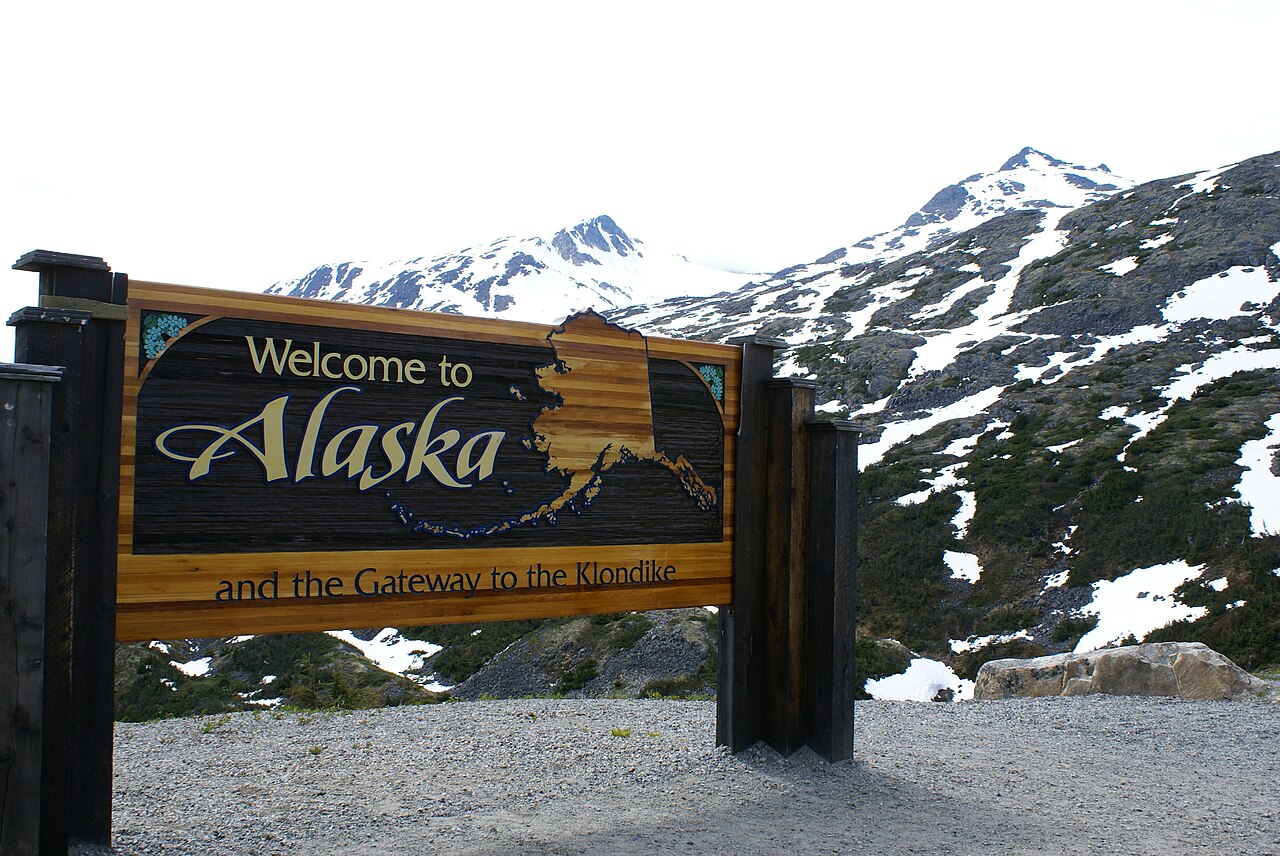
Yes, Alaska is a permitless carry state, and it has been since 2003. Anyone 21 or older who may legally possess a firearm can carry a handgun openly or concealed without a permit. People under 21 may not carry a concealed handgun.
This guide covers Alaska gun laws in plain terms: the Alaska concealed carry permit, the required 12-hour course, reciprocity, open carry, guns in cars, off-limits places, the duty to inform police and self-defense law. Each section points to the official source.
Alaska Concealed Carry At A Glance
| Permitless carry | Yes, since 2003 |
|---|---|
| Minimum age to carry | 21 |
| Permit name | Alaska Concealed Handgun Permit (ACHP) |
| Issued by | Alaska Department of Public Safety (Permits and Licensing Unit) |
| Permit fee | $90 new; $25 renewal |
| Permit length | 5 years |
| Training required | Yes: DPS-approved Alaska course of at least 12 hours with a handgun competence test, completed within 12 months before applying (AS 18.65.715; 13 AAC 30.070). |
| Online course counts? | No, in-person training required |
| Non-resident permit | No (Alaska residents of at least 90 days only.) |
| Lifetime permit | No |
| States that honor it | 37 (Alaska DPS list) |
| Last verified | November 2, 2026 |
Do You Need A Permit To Carry In Alaska?
No, not if you are 21 or older. The Alaska Department of Public Safety (DPS) says anyone 21 or older who may legally possess a firearm can carry concealed or openly, and “a firearms permit is not required.”
Under 21, concealed carry is a crime under AS 11.61.220(a)(6). DPS says a permit from another state does not change this. The law gives a defense if you are in your own home or actually hunting, fishing, trapping or doing another lawful outdoor activity that requires a weapon for protection.
You may not carry at all if you are a prohibited person under state or federal law. That includes most felons and people under certain domestic violence orders or convictions.
Why Get An Alaska Concealed Handgun Permit Anyway?
Most Alaskans who get the permit want to carry outside Alaska. DPS lists 37 states that recognize a valid Alaska permit.
Other real benefits:
- Faster gun purchases. DPS says the ATF approves the Alaska permit as an alternative to the point-of-sale NICS background check. You can ask DPS for a “NICS Exempt” label by filing a supplement form.
- Training. The required course covers Alaska deadly force law, taught by an attorney or certified police officer.
How To Get An Alaska Concealed Handgun Permit
DPS issues the Alaska Concealed Handgun Permit (ACHP) through its Permits and Licensing Unit. It is only for Alaska residents.
- Check eligibility. You must be 21 or older, an Alaska resident for at least 90 days, and eligible to possess a firearm. You cannot have two or more Class A misdemeanor convictions in the past six years, or a court order for alcohol or substance abuse treatment in the past three years.
- Take an approved handgun course. You must finish it within the 12 months before you apply.
- Get fingerprinted. Use a DPS-approved fingerprint vendor. The vendor may charge its own fee.
- Apply in person. Bring the application, your course certificate, a photo and your Alaska driver’s license or ID to an Alaska State Troopers or Wildlife Troopers post, or an authorized municipal police department.
- Pay the fee. The new-permit fee is $90 on the October 2026 application form. It is not refunded if you are denied.
The permit expires on your birthday in the fifth year after your most recent birthday, so the term never runs past five years. Find forms on the DPS Concealed Handgun Permits page, or call the Permits and Licensing Unit at (907) 269-0392.
Do You Need A Class For An Alaska Carry Permit?
Yes. AS 18.65.715 requires a certificate from a handgun course approved by DPS. Under 13 AAC 30.070, the course must include at least 12 hours of handgun training and “a test of competence with a handgun.”
Instruction on Alaska firearms law and deadly force must be given by an Alaska-licensed attorney or a police officer certified by the Alaska Police Standards Council. Other instructors must register with DPS and submit fingerprints. Your certificate must state that you demonstrated physical competence with a handgun.
Online courses do not count. DPS states that “there are no online or correspondence courses or programs outside of Alaska that are approved.” Plan on an in-person class in Alaska that includes the shooting test.
If you want to learn the basics before you book that class, a short online safety course can be a helpful primer. It does not replace the Alaska course, it is not DPS-approved, and its certificate is not a permit.
Get Started On Your Permit Online
Watch a short instructional video on firearm safety and responsible carry, take a 10-question quiz, and download your certificate of completion.
Start The Free Online Safety Video →
The certificate is a training record, not a license or permit. In Alaska, you apply for the Alaska Concealed Handgun Permit (ACHP) through the Alaska Department of Public Safety (Permits and Licensing Unit).
Can Non-Residents Get An Alaska Carry Permit?
No. DPS says the permit is available only to Alaska residents. A permit holder who moves away cannot renew unless they are a resident at renewal.
Visitors do not need one. If you are 21 or older and may legally possess a firearm, you can carry in Alaska without a permit. Alaska also honors other states’ permits, as explained below.
Which States Honor The Alaska Concealed Handgun Permit?
DPS lists 37 states that recognize a valid Alaska permit. They include Idaho, Montana, Arizona, Utah, Texas, Florida, Georgia, Pennsylvania and Virginia. Several, such as Texas, Florida and Pennsylvania, have written agreements with Alaska.
States not on the list, such as Washington, Oregon, California, New York and Illinois, should be treated as not honoring it. Check the DPS reciprocity page before you travel, and follow the law of each state you enter.
Alaska honors any valid concealed handgun permit from another state under AS 18.65.748. The holder must be 21 or older, with no exceptions. Alaska does not require the other state to honor Alaska’s permit in return.
Going next door? Alaska borders no other state, and its nearest Lower 48 neighbor, Washington, is not on the DPS list. Read our Washington gun laws guide before you go, or compare every state on our concealed carry laws by state hub.
Can You Open Carry In Alaska?
Yes. DPS says people 21 or older who may legally possess a firearm may carry openly without a permit.
Alaska’s under-21 carry ban in AS 11.61.220(a)(6) applies to concealed weapons. Federal law separately limits handgun possession by people under 18.
The same off-limits places listed below apply to open carry. Private property owners can also ask you to leave.
Can You Keep A Gun In Your Car In Alaska?
Yes. Adults 21 and older who may legally possess a firearm can keep a loaded handgun in a vehicle without a permit. If it is concealed and an officer stops you, you must tell the officer right away (see Duty to inform below).
Parking lots: AS 18.65.800 says the state, cities and private parties may not ban storing a locked firearm in a vehicle that is legally parked on their property. Employers can still ban guns in company vehicles, in secured restricted access areas, and in employer lots within 300 feet of those areas if posted.
School parking lots: AS 11.61.210(a)(7) bans weapons on school grounds, including the parking lot, without permission. Adults 21 and older may keep a weapon other than a loaded firearm in the trunk or in a closed container in the vehicle. Licensed child care centers have a similar rule for adjacent parking lots under AS 11.61.220(a)(4)(A).
Where You Can’t Carry A Gun In Alaska
Permit or not, Alaska law bars firearms or concealed carry in these places:
- Another person’s home, concealed, without first getting express permission from an adult who lives there (AS 11.61.220(a)(1)(B)).
- Bars and other places that serve alcohol for on-site drinking, if the firearm is loaded and on your person (AS 11.61.220(a)(2)). There is a defense for a concealed handgun in a licensed restaurant if you do not drink there (AS 11.61.220(d)(1)).
- K-12 schools and preschools, including buildings, grounds, parking lots, school buses and school events, without permission (AS 11.61.210(a)(7)).
- Licensed child care facilities that are not private homes, including adjacent parking lots (AS 11.61.220(a)(4)(A)).
- Courtrooms, court offices and courthouses used only by the court system and justice agencies (AS 11.61.220(a)(4)(B)).
- State-funded domestic violence or sexual assault shelters (AS 11.61.220(a)(4)(C)).
- Anywhere while impaired by alcohol or drugs, including inside a vehicle (AS 11.61.210(a)(1)).
- Federal property where federal law bans firearms, such as post offices and federal courthouses.
Duty to inform: Yes. If you are carrying a concealed deadly weapon and a peace officer contacts you for an official purpose, you must immediately tell the officer. You must also let the officer secure the weapon, or secure it yourself if directed, for the length of the contact (AS 11.61.220(a)(1)(A)).
Renewing An Alaska Concealed Handgun Permit
You can renew during the 90 days before your permit expires. DPS lists the renewal fee as $25.
Late renewal is allowed for up to 60 days after expiration for $50. After that, you must apply as a new applicant and take a new training course.
Report a name or address change to DPS in writing within 30 days. Address changes are free.
Alaska Castle Doctrine And Stand Your Ground Law
Alaska’s self-defense law is AS 11.81.335. You may use deadly force when you reasonably believe it is necessary to defend against death, serious physical injury, kidnapping, sexual assault, sexual abuse of a minor or robbery.
The statute keeps a duty to retreat only if you know you can leave with complete personal safety. That duty does not apply on premises you own, lease or live in, at your workplace, when protecting a child or household member, or “in any other place where the person has a right to be.” That last phrase came from House Bill 24 in 2013 and makes Alaska a stand-your-ground state.
Alaska also grants civil immunity. Under AS 09.65.330, a person who uses force allowed by AS 11.81 is not liable for injury or death to the attacker, and the court must award attorney fees if immunity applies. The immunity does not cover force against officers, firefighters or medical responders doing their jobs.
These laws do not prevent an arrest or charges. A self-defense case can still mean an investigation, a trial and an expensive legal defense.
Protect Yourself After A Self-Defense Incident
CCW Safe is a self-defense legal protection membership. It pays criminal and civil defense costs upfront for members involved in a self-defense incident, so you aren't paying for a defense lawyer out of your own pocket.
Alaska Gun Laws FAQ
Is Alaska A Constitutional Carry State?
Yes. Alaska adopted permitless carry in 2003. Anyone 21 or older who may legally possess a firearm can carry openly or concealed without a permit.
Can You Carry A Gun Under 21 In Alaska?
Not concealed. DPS says people under 21 may not carry a concealed handgun, even with another state’s permit. The law has a defense for your own home and for hunting, fishing, trapping and similar outdoor activities.
Do You Have To Tell Police You Are Carrying In Alaska?
Yes, if you are carrying concealed. You must tell the officer immediately and let the officer secure the weapon during the contact (AS 11.61.220(a)(1)(A)).
Can You Carry In A Restaurant That Serves Alcohol In Alaska?
Only in limited cases. Carrying a loaded firearm where alcohol is served for on-site drinking is generally a crime. There is a defense for a concealed handgun in a licensed restaurant if you do not drink (AS 11.61.220(d)(1)).
How Much Is An Alaska Concealed Carry Permit?
The new-permit fee is $90 on the current DPS application form, plus fingerprinting and course costs. Renewal is $25.
Can You Carry A Gun In Church In Alaska?
Alaska has no statute that bans carry in places of worship. A church can still forbid guns on its property, and you must leave if asked. Watch for church-run preschools, schools and licensed child care centers, because their grounds and parking lots have their own bans.
If your church is forming a safety team, read about legal protection for church security teams.
Sources
- Alaska DPS: Concealed Handgun Permits
- Alaska DPS: Alaska Concealed Handguns
- Alaska DPS: Reciprocity
- Alaska DPS: ACHP New Application (Rev. 10/2026)
- Alaska DPS: Firearms FAQ
- 13 AAC 30.070 (Handgun Course Requirements, Justia mirror)
- AS 11.61.220 (FindLaw mirror)
- AS 11.61.210 (FindLaw mirror)
- AS 18.65.800 (FindLaw mirror)
- AS 11.81.335 (FindLaw mirror)
- AS 09.65.330 (FindLaw mirror)
- Alaska Legislature: HB 24 (2013) Session Law
- Handgunlaw.us: Alaska (secondary source)